Santa Barbara CPR Onboarding: 30/60/90-Day Compliance and BLS vs. Heartsaver
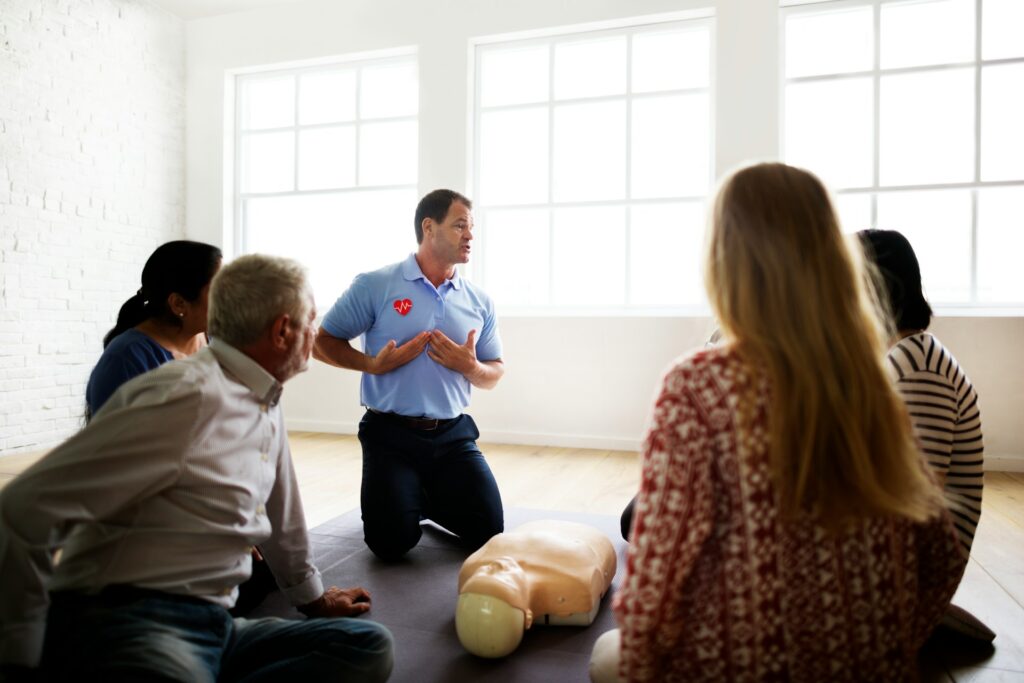
Santa Barbara Employers’ Fast Track to CPR Compliance
A clear CPR onboarding plan keeps people safer and keeps HR from chasing paperwork. When new hires know what to expect in their first 90 days, they settle in faster and your workplace is better prepared for sudden emergencies. A simple, repeatable system also helps meet training expectations from regulators, insurers, and corporate safety teams.
CPR, AED, first aid, and BLS are all part of that system. CPR is the chest presses and rescue breaths that keep blood moving. AEDs are the devices that can shock a heart back into a normal rhythm. First aid covers common injuries and sudden illness. BLS, or Basic Life Support from the American Heart Association (AHA), is the higher level of CPR training for healthcare and clinical teams. In this playbook, we will walk through how Santa Barbara employers can pick the right course for every role, build a 30/60/90-day plan, and set up simple first-day readiness kits that help skills stick.
Mapping Your Risk and Roles Before Day One
Before you enroll a new hire in any CPR course, it helps to do a quick scan of the job and the worksite. Ask a few simple questions:
- Is this person patient-facing, public-facing, or working mostly in the back office?
- Do they work where many people gather, like a gym, school, hotel, or event space?
- Are children, older adults, or medically fragile people on site every day?
- Is there any special equipment, like pools, fitness machines, or power tools?
Patient-facing clinical roles are usually your highest risk. These are jobs in medical and dental offices, outpatient clinics, and similar settings. They often require AHA BLS Provider training, which focuses on team-based CPR, use of bag-mask devices, and care in more complex medical situations.
Roles that are public-facing, but not clinical, usually fit best with AHA Heartsaver courses. For example:
- Heartsaver CPR AED for staff in low-risk settings who need CPR and AED only
- Heartsaver First Aid CPR AED for roles that also need to respond to injuries and illness
Typical BLS roles can include nurses, EMTs, dental staff, physical therapists, and medical assistants. Typical Heartsaver roles can include office staff, fitness trainers, teachers, hospitality workers, and retail staff.
In Santa Barbara, your organization’s own policies also matter. Facility credentialing rules, state licensing requirements, and insurer or corporate standards often specify which AHA course is accepted. A short review with HR, department leaders, and your safety committee makes it easier to plug new hires into the correct track, especially if you use a local AHA training option like CPR certification in Santa Barbara.
Choosing BLS vs Heartsaver for Each New Hire
The BLS vs Heartsaver choice does not need to be confusing. Here is the simple way to think about it:
- BLS Provider: For clinical teams that may respond to cardiac arrest with other trained staff, use medical equipment, and care for patients in a healthcare setting.
- Heartsaver CPR AED or Heartsaver First Aid CPR AED: For lay rescuers who need strong CPR and AED skills, and in some cases basic first aid, in a workplace or community setting.
A basic role-based guide for Santa Barbara employers might look like this:
- Enroll in BLS Provider: nurses, physicians, EMTs, medical assistants, respiratory staff, dental teams, physical and occupational therapists, some technicians.
- Enroll in Heartsaver First Aid CPR AED: teachers, early childhood staff, child-care workers, coaches, security guards, maintenance teams.
- Enroll in Heartsaver CPR AED: office staff, reception, fitness trainers, lifeguards who already have other medical modules, hospitality and retail workers.
Mixed-duty roles often need a bit more thought. A school nurse may need BLS because of their clinical responsibilities, while coaches and yard supervisors might be better matched with Heartsaver First Aid CPR AED. Child-care providers may also fall into Heartsaver First Aid CPR AED because of injury, choking, and allergy risks.
Partnering with a local AHA training center in Santa Barbara makes it easier to keep these tracks straight. Centralized enrollment, predictable course calendars, and eCard record-keeping help HR keep BLS and Heartsaver requirements up to date across multiple locations, including other sites such as Uniondale or Troy if your organization operates there too.
The 30/60/90-Day CPR Compliance Roadmap
A simple 30/60/90-day plan turns CPR training from a scramble into a checklist.
First 30 days
During the first month, focus on first-day readiness and getting people into the right AHA course quickly.
- Add CPR course selection to your standard onboarding checklist by job title.
- Schedule the correct AHA BLS or Heartsaver class in the first 1 to 2 weeks of employment.
- For employees who arrive with current AHA cards, verify them and log the expiration date.
- Share interim safety briefings so staff know how to call for help, where the AEDs are, and who is already trained until they finish their class.
Days 31 to 60
Once the initial certification is done, use the next 30 days to reinforce skills.
- Run short, scenario-based drills in each department.
- In healthcare, this may mean quick code blue walk-throughs.
- In schools or child-care, practice responses for choking, playground injuries, or asthma.
- In gyms, retail, and hospitality, walk through what to do if a customer collapses near the front desk or in a restroom.
These drills do not replace formal training, but they help people feel more confident using what they learned in class.
Days 61 to 90
The final 30 days are about tightening your system.
- Audit who has completed CPR, AED, first aid, or BLS training.
- Confirm that AHA eCards are logged in your HR or safety system.
- Set automatic reminders for renewals, long before cards expire.
- Work with managers to include CPR responsibility in annual reviews and in emergency response team assignments.
With this roadmap, CPR certification in Santa Barbara becomes a steady process instead of a last-minute rush.
First-Day Readiness Kits That Make CPR Training Stick
A first-day readiness kit is a simple packet that gives each new hire a clear picture of their role in an emergency before they walk into training. It can include:
- Written emergency response roles broken down by job type
- A simple, marked map that shows AED locations and emergency exits
- Local EMS activation steps, including how to get help quickly in your building
- A short, AHA-aligned CPR and AED quick-reference checklist
Adding digital pieces makes the kit even more helpful. You might include links to AHA CPR and AED resources, short microlearning refreshers, or quick facility videos that show where to find AEDs and how to return them after use. Simple forms or checklists for documenting a real-world CPR event can also live in this kit so staff understand what happens after an emergency.
HR teams and department leaders in Santa Barbara can adjust these kits for different groups. Clinical staff may get more detail about roles during codes. Administrative staff may focus on calling for help and bringing the AED. Education and fitness staff may focus on child and athlete emergencies. Hospitality teams may need guidance for large crowds or remote areas of a property.
Building a Santa Barbara CPR Culture That Lasts
When you match each role to the right AHA course, follow a 30/60/90-day plan, and give new hires a clear first-day readiness kit, CPR onboarding becomes predictable and low stress. Staff know what is expected, HR has a simple checklist, and your workplace is better prepared when something sudden happens.
Over time, these steps grow into a steady CPR culture. Job descriptions clearly list CPR expectations, onboarding always includes course enrollment, and drills keep skills fresh. New hires do not just earn a card; they join a team that is ready to act when every second counts.
Protect Your Community With Life-Saving Skills Today
If you are ready to gain the confidence to act in an emergency, we are here to help you take the next step. Use our course finder to schedule your CPR certification in Santa Barbara and start building skills that can truly make a difference. At CPR, AED, and First Aid Certifications, we offer flexible class options so you can find training that fits your schedule. If you have any questions or need help choosing the right course, please contact us.