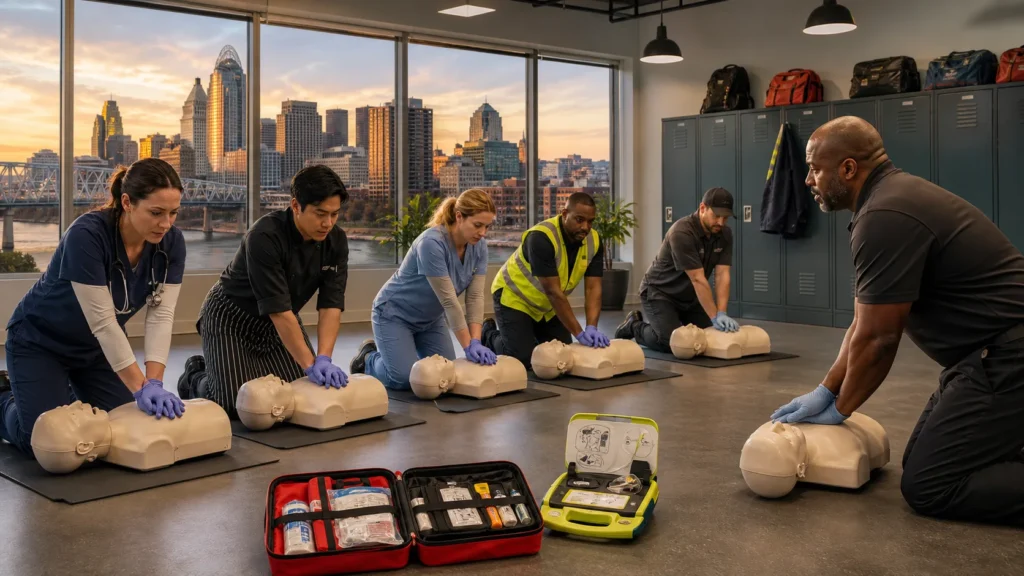
Evening CPR Training That Fits Real Cincinnati Life
CPR is not something most people think about until they need it. For many people in Cincinnati, the real challenge is not the skills themselves, but finding a class that actually fits a real work schedule. When shifts change every week or run late into the night, a standard daytime course often is not realistic.
At CPR, AED, and First Aid Certifications, we provide in-person training that is aligned with American Heart Association (AHA) guidelines and offers same-day certification for CPR, AED, First Aid, and BLS. We work with healthcare professionals and community members in multiple cities, and we see the same pattern again and again: people want to stay certification-ready, but they cannot step away from their jobs during the day. That is why evening CPR classes in Cincinnati are most helpful when they are designed around real shift patterns, not just a generic calendar.
Understanding Cincinnati Work Shifts and CPR Needs
Cincinnati has many different work rhythms, often in the same family or workplace. Some people are on early hospital shifts, while others are stocking warehouses or serving late dinners when most classes are already over.
Common local schedules often include:
- Hospital and clinic shifts that run days, evenings, or nights
- Long-term care and home health rotations with changing on-call hours
- Manufacturing and warehouse shifts on first, second, or third shift
- Restaurant, bar, and hotel work that peaks in the late afternoon and evening
- Public safety or security roles that cover nights, weekends, and holidays
Each of these jobs connects to different CPR and BLS needs. For example:
- Healthcare professionals usually need AHA-aligned BLS certification
- Caregivers, support staff, and fitness staff may need CPR/AED and First Aid
- Nonclinical staff, such as security or front desk staff, may be expected to respond first in an emergency
When course times do not line up with these schedules, people often push renewals back or let certifications expire. That can create stress at work, especially in healthcare settings where compliance is closely tracked. Evening options that respect changing shifts help keep skills current and reduce last-minute scrambling.
Even in our other locations, like Uniondale and Troy, we see how much it helps when class times actually match the way people work.
Building CPR Schedules Around Actual Shift Patterns
Designing evening CPR classes in Cincinnati starts with one simple question: when are people actually free? For many workers, that “free time” window is short and tied directly to the start and end of specific shifts.
We often look at:
- First shift staff who finish in the late afternoon and can attend early evening
- Second shift staff who prefer late-night or early afternoon before work
- Third shift staff who might need a late afternoon class before heading in
By mapping class start times to these patterns, we can create:
- Early evening classes that start soon after a day shift ends
- Mid-evening options that catch people after a shorter second shift
- Post-shift classes that allow night workers to attend before or after work without being up all day
AHA-aligned course structures have predictable lengths, so students know how long they will be in class. That makes it much easier to plan:
- Commute from work to class
- Time in the course itself
- Enough rest before the next shift
When those pieces are clear, people are less likely to cancel or no-show because the class does not push too far into the night or cut into the start of a shift.
Making Evening CPR Classes Efficient and Engaging
After a long day or night at work, no one wants to sit through a slow, unfocused class. Evening CPR sessions work best when they are organized, hands-on, and respectful of everyone’s energy level.
A streamlined in-person format might include:
- Short instructor demonstrations that show each skill step by step
- Focused skill stations for compressions, rescue breaths, and AED use
- Clear practice sets followed by quick, fair testing for same-day certification
To keep people engaged after work, we rely on:
- Hands-on practice with manikins and training AEDs
- Realistic scenarios drawn from healthcare, workplace, and community settings
- Small group rotations so everyone stays active and involved
Practical details matter just as much as lesson plans. For evening CPR classes in Cincinnati, it helps to have:
- Clear directions so no one wastes time finding the classroom
- Easy, safe access and parking, especially after dark
- Simple, fast check-in so class can start on time
- Reliable start and finish times, so people can plan rides and get sleep.
Keeping the evening focused and predictable respects both the student and their next shift.
Coordinating CPR Training with Employers and Teams
Many teams in Cincinnati find it easier when CPR and BLS training is planned together instead of one person at a time. Employers can help a lot by building training blocks that match their own staffing patterns.
Helpful strategies include:
- Setting aside dedicated evening sessions for specific units or departments
- Matching class dates to slower days or typical off days
- Planning around common patterns like 3x12s, 4x10s, or rotating weekends
Group planning makes it easier to:
- Keep CPR, AED, First Aid, and BLS expiration dates in the same window
- Avoid coverage gaps by shifting staff strategically for one evening
- Cut down on last-minute cancellations when classes collide with surprise schedule changes
Communication is a big part of this. When employers:
- Create a simple training calendar
- Share dates with staff early
- Send reminders as the class gets closer
They support both compliance and real readiness. We see this same approach in places like our Santa Barbara location, where many teams plan AHA-aligned renewals together.
Flexible Evening CPR Options for Busy Cincinnati Professionals
When evening CPR classes in Cincinnati are built around real work shifts, it becomes much easier for both healthcare professionals and community members to stay current. Classes that match start and end times for actual shifts, offer multiple evening options, and respect people’s need for rest help remove many of the barriers to keeping CPR, AED, First Aid, and BLS certifications active.
Reviewing your own shift pattern and certification expiration date is a simple first step. From there, matching those details to an evening class that fits your real schedule can turn CPR training from a source of stress into a normal part of your work life. By planning ahead and choosing classes that fit your work rhythm, you can stay ready to respond when it matters most, without giving up your paycheck or your sleep.
Protect Your Community With Convenient Life-Saving Skills
If your daytime schedule is packed, our evening CPR classes in Cincinnati make it practical to earn or renew your certification without missing work or family time. At CPR, AED, and First Aid Certifications, we focus on hands-on, straightforward training that prepares you to respond confidently in real emergencies. Choose the class time that fits your routine, and we will handle the rest with certified instructors and up-to-date guidelines. If you have questions about scheduling or group options, please contact us.