Evaluating Hands-Only CPR Training in Cincinnati for Bystanders
Why Hands-Only CPR Matters for Cincinnati Bystanders
Hands-only CPR is simple, fast, and built for real emergencies in public places. It focuses only on strong, steady chest compressions, without rescue breaths. For many people, this feels easier to learn and easier to remember when stress is high.
Traditional CPR uses both rescue breaths and compressions. Hands-only CPR skips the breaths and keeps your attention on pushing hard and fast in the center of the chest. That makes it a strong option for regular bystanders in places like Cincinnati and nearby communities, where sudden collapses can happen at work, at the store, or at a game.
Sudden cardiac arrest is a time-sensitive emergency. Every minute that passes before chest compressions begin means the person’s chances of survival drop. When someone nearby starts hands-only CPR right away, it can help keep blood moving to the brain and heart until Cincinnati EMS arrives.
Understanding AHA Guidance on Hands-Only CPR
The American Heart Association gives clear guidance on when hands-only CPR is a good choice. It is meant for teens and adults who suddenly collapse, are unresponsive, and are not breathing normally. In those moments, waiting for trained medical teams is not enough, and bystanders can make a real difference.
AHA guidance focuses on these key steps:
- Make sure the scene looks safe
- Check for response and normal breathing
- Call 911 or have someone else do it
- Start firm, fast compressions in the center of the chest
Many people hold back because they are afraid of “doing it wrong.” Some worry they might hurt the person, or they feel they are not allowed to act because they are not healthcare workers. Others are nervous about legal issues. AHA-aligned training helps by breaking down each step, showing what good compressions look like, and explaining how Good Samaritan ideas often support people who try to help in good faith.
In our AHA-aligned courses in the Cincinnati area, we teach:
- How fast to push
- How deep to push for adults
- How to let the chest rise fully between compressions
- How to stay safe while you help
The goal is a simple, memorable skill set that people can recall even when they feel nervous.
What Hands-Only CPR Training in Cincinnati Includes
Hands-only CPR training in Cincinnati is built around what actually happens when someone collapses in front of you. We do not just talk about CPR. We walk through the steps in order, so they stick in your mind.
A typical hands-only CPR session covers:
- Spotting sudden cardiac arrest and knowing when to act
- Calling 911 quickly and clearly
- Starting high-quality chest compressions right away
- Using an AED if one is nearby
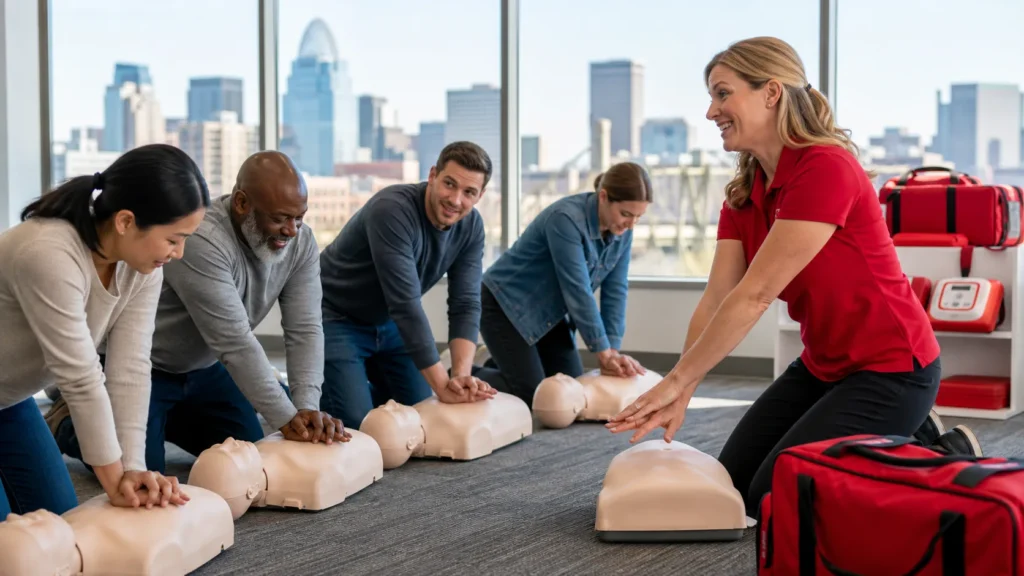
Hands-on practice is a big part of it. Learners use manikins to feel how deep to press and how quickly to move. Instructors give step-by-step coaching, correct hand placement, and help you find a good rhythm. Simple scenarios are used so workplaces, schools, and community groups can picture how they would respond in their own halls, gyms, offices, or cafeterias.
Because the focus is on only a few core skills, hands-only CPR training can often be completed in a short time. AHA-aligned courses offered through our team in Cincinnati are designed to be practical, with clear proof of completion available quickly so participants can show they have taken current training that reflects American Heart Association science.
Benefits for Workplaces, Schools, and Community Groups
When more people in a building know hands-only CPR, the whole place becomes safer. In Cincinnati and nearby areas within a short drive of the city, this matters in busy offices, fitness centers, churches, and schools.
For employers and group leaders, training brings several benefits:
- Stronger emergency response plans
- Staff who feel more confident about stepping in
- A shared safety language for drills and real events
- Alignment with common safety expectations in many industries
Hands-only CPR training also pairs naturally with AED familiarization. Many sites already have an AED on the wall, but people may be shy about using it. In training, we show how simple AED prompts are, how to place the pads, and how to follow the device’s voice instructions while keeping compressions going when appropriate.
Groups that train together often find that:
- They respond more quickly during drills
- They know who will call 911 and who will start compressions
- They feel less panic when someone collapses on-site
This kind of shared readiness is just as useful at a church gathering as it is on a factory floor or in a school hallway.
Choosing the Right Hands-Only CPR Course Locally
Not all CPR classes are the same, so it helps to know what to look for when choosing hands-only CPR training in Cincinnati. A strong course should clearly follow American Heart Association guidance and use up-to-date methods and materials.
Key things to consider include:
- AHA alignment and current guidelines
- Instructors with real teaching experience
- Reasonable class size so everyone gets practice time
- Course length that fits your schedule but still allows for hands-on work
- Same-day or quick documentation of completion
Individuals might choose open enrollment classes, while larger groups might prefer on-site sessions at their own office, school, gym, or community center within a short drive of downtown Cincinnati. This keeps training close and convenient, and it allows scenarios to be tailored to the actual spaces where a collapse might happen.
It is also smart to think about renewal. CPR science and AHA recommendations can change over time, so skills should be refreshed on a regular basis. We structure our AHA-aligned programs in the Cincinnati area to make it simple for people to update what they learned and stay ready to act.
Take the Next Step to Become a Prepared Bystander
Online videos and quick social media clips can introduce the idea of hands-only CPR, but they do not replace real practice with feedback. Formal training gives you the chance to ask questions, repeat the motions until they feel natural, and gain confidence before you ever face a real emergency.
For people in Cincinnati and nearby communities, the most likely places to use hands-only CPR are everyday spots, such as:
- Offices and warehouses
- Shopping centers and grocery stores
- Parks, walking trails, and community fields
- School gyms and sporting venues
When someone collapses, the nearest bystander becomes the first responder. With hands-only CPR skills and basic AED comfort, that bystander can support the person’s chances of surviving until EMS takes over. Being prepared is about more than knowing the steps in your head. It is about having practiced them with guidance so your hands know what to do when every second counts.
Protect Your Community With Lifesaving Skills Today
If you are ready to feel confident stepping in during an emergency, our Hands-only CPR training in Cincinnati makes it simple to get started. At CPR, AED, and First Aid Certifications, we provide practical, hands-on instruction that fits your schedule and comfort level. Explore upcoming class options or reach out with questions, and we will help you choose the right course. If you need personalized guidance before registering, you can contact us anytime.