Finding High-Value CPR Classes Raleigh NC for Childcare Staff
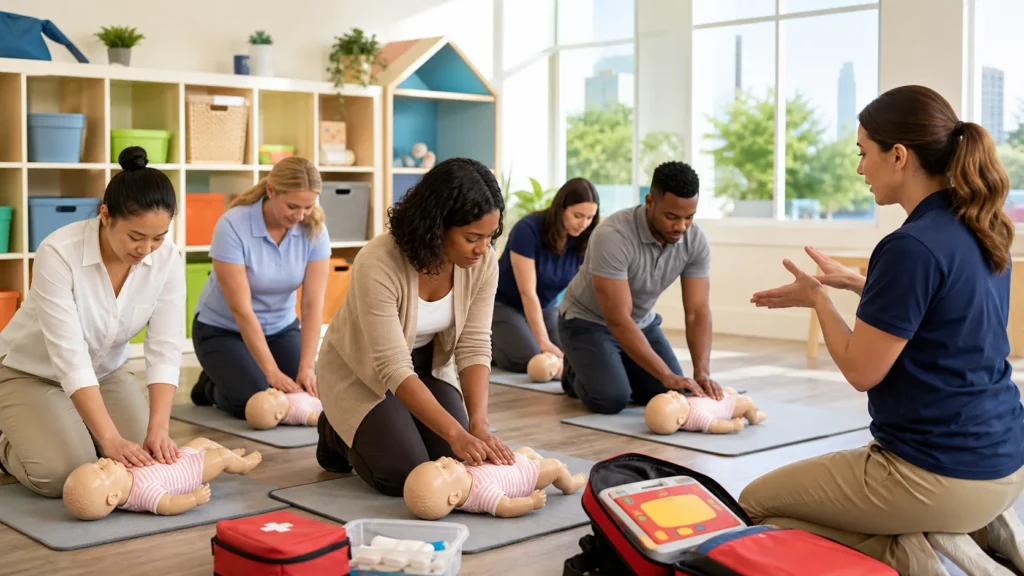
High-Impact CPR Training for Safer Childcare Centers
Childcare staff spend all day with infants, toddlers, and young kids, so they see medical emergencies that many people never face. Choking at snack time, allergic reactions, breathing problems, and sudden illness can all happen within seconds. In those moments, fast, calm action can make a real difference in how a child recovers.
High-value CPR classes in Raleigh, NC, give childcare teams the skills and practice to act with confidence. With the right training, staff know what to do in those high-risk moments during meals, outdoor play, and nap time. They are not guessing; they are following clear steps they have practiced again and again.
We focus on instructor-led American Heart Association (AHA) training with same-day certification cards, which works well for busy childcare schedules. Let us walk through how to pick the right AHA course, how to choose a quality training provider in Raleigh, and how to line up CPR training with state rules and your own center policies.
Matching CPR Courses to Childcare Licensing Needs
Childcare licensing rules usually expect more than “someone in the building knows CPR.” Many centers must have at least one trained staff member on site at all times, often on every shift and during transport or field trips. Lead teachers, assistants, floaters, and directors may all need documented CPR, AED, and First Aid training.
For AHA courses, childcare centers often look at a few main options:
- Heartsaver CPR AED, which focuses on CPR skills and AED use for all ages
- Heartsaver First Aid CPR AED, which adds important first aid skills to CPR and AED training
- Basic Life Support (BLS), which can be a good fit for school nurses or more medically trained staff
Many centers pick Heartsaver First Aid CPR AED because it covers common daycare emergencies in one course. BLS might be requested when staff work closely with healthcare providers, such as in a school with a full-time nurse.
To make sure a class meets your needs, it helps to:
- Confirm that the certification card clearly lists AHA and the course name
- Check that your childcare licensor and insurance company accept AHA Heartsaver or BLS cards
- Ask if your center’s policies, or any program you partner with, require a specific course type
Planning ahead makes life easier for everyone. Many centers:
- Schedule classes before license renewal dates
- Build CPR and First Aid into new-hire onboarding
- Use staff workdays or in-service days for group classes
This kind of planning helps avoid last-minute training gaps that create stress and scheduling problems.
What High-Value CPR Classes in Raleigh, NC, Include
Not all CPR classes are built the same way. For childcare staff, the most helpful courses are designed with kids in mind. A strong, childcare-focused class usually includes:
- Infant CPR with one-rescuer skills
- Child CPR and choking relief for different sizes and ages
- How to use an AED safely and quickly
- Basic first aid for bleeding, burns, falls, and sudden illness
Hands-on practice is a big part of learning. Staff should have plenty of time with manikins and AED trainers, not just watch videos. Good classes use simple, real-world scenarios, like a toddler choking at lunch or a child who collapses during active play. Step-by-step coaching helps staff build muscle memory so they can stay calmer in real emergencies.
AHA guidelines are based on current science and follow a standard format across the country. That means:
- Clear, updated CPR steps that match national guidance
- Skills checks that help confirm each person can actually perform the actions
- Certification cards that are recognized in many workplaces and states
Childcare staff also benefit from practical features that make courses easier to fit into real life, such as:
- Same-day certification cards, so HR files are up to date right away
- Helpful reminders about renewal timelines so no one expires unnoticed
- Weekday, evening, or weekend options that work around classroom coverage
Evaluating Raleigh CPR Providers for Childcare Teams
Choosing CPR classes in Raleigh, NC, for your center is not only about where the class is held. It is about who is teaching, how they teach, and whether they understand childcare needs. When you compare providers, it can help to ask a few key questions.
First, check that the provider teaches AHA courses and issues official AHA certification cards. Then, look at instructor background. Instructors who have real experience teaching childcare staff often:
- Explain skills in simple, kid-focused language
- Understand common daycare layouts and daily routines
- Use examples that match mealtimes, playground time, and nap rooms
Class size also matters. Smaller groups give each staff member more chances to practice with feedback. Ask about:
- Maximum class size
- Instructor-to-student ratio
- How much time is spent on infant and child skills specifically
For many centers, on-site training at the childcare location provides an extra layer of convenience. It lets staff practice in the same rooms where they work every day and avoids travel time. It also reduces coverage problems because teams can rotate in and out of class.
Looking at the total value, not just a single class detail, will give you a better sense of fit for your center.
Building an Ongoing CPR Training Plan for Your Center
CPR, AED, and First Aid training works best as an ongoing plan, not a one-time project. Staff change, new classrooms open, and guidelines update over time. Without a plan, certifications can quietly expire and you might not notice until an inspection or an emergency.
A simple training calendar can keep everything on track. Many centers:
- Keep a list of each staff member’s course type and expiration date
- Add renewal classes several months before anyone expires
- Mix in quick, informal refreshers during staff meetings, such as a short review of choking steps
It can also help to name one or two CPR champions on your team. These people:
- Track training and remind staff when they are due
- Coordinate with your training provider to plan group sessions
- Help align emergency response plans with what staff have learned in class
When CPR training is steady and organized, it becomes part of your center’s safety culture. Parents feel better knowing staff are trained, and staff feel more supported walking into work each day. During a real pediatric emergency, that preparation helps everyone stay calmer, work together, and give each child the best possible chance for a safe outcome.
Gain Lifesaving Skills With Convenient Local Training
Protect your family, coworkers, and community by enrolling in our CPR classes in Raleigh, NC today. At CPR, AED, and First Aid Certifications, we provide hands-on, American Heart Association, approved training that fits your schedule and comfort level. If you have questions about class options or group training, please contact us so we can help you choose the right course and get you confidently prepared to respond in an emergency.