First Aid, CPR, and AED Courses for Home Health Aides in Salisbury
Why Home Health Aides Need Strong Emergency Skills
Home health aides in Salisbury do much more than help with daily tasks. You are often the main person watching over clients with heart disease, breathing problems, diabetes, and other ongoing health issues. That means you are usually the first one to see when something is not right.
When a client suddenly has trouble breathing, becomes unresponsive, or shows signs of a stroke, every second matters. First aid, CPR, and AED skills help you act fast in those first minutes before EMS can get to the home. For clients who live alone or have limited support, your quick actions can keep them stable until more help arrives.
Our team at CPR, AED, and First Aid Certifications is aligned with American Heart Association (AHA) guidelines and focuses on in-person, hands-on training that fits real home care situations. We shape our classes so home health aides feel ready to respond to emergencies in small apartments, crowded homes, and everyday living spaces, not just in medical facilities.
What First Aid CPR AED Training Covers for Home Care
First aid CPR AED in Salisbury covers skills that match what home health aides see on regular visits. In first aid training, you learn how to stay calm, check the scene, and quickly decide what to do first.
Key first aid topics that matter in home care include:
- Bleeding control from cuts or accidents
- Treating minor and more serious burns from kitchens or heaters
- Helping after a fall, including checking for possible head, neck, or back injury
- Responding to diabetic issues, like low or high blood sugar
- Spotting stroke warning signs and calling for help right away
- Managing breathing problems for clients with asthma, COPD, or allergies
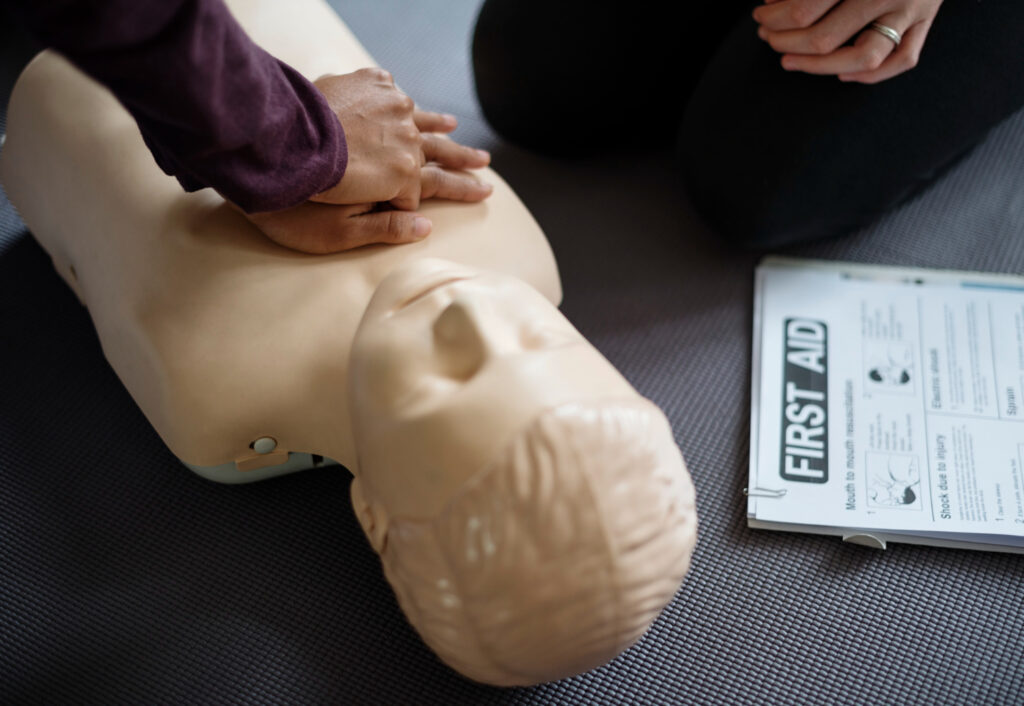
CPR training focuses on high-quality chest compressions and rescue breaths. You practice:
- Proper hand placement on the chest
- Pushing hard and fast at the correct rate and depth
- Allowing full chest recoil between compressions
- Giving effective rescue breaths with a barrier device
- Placing a person in the recovery position when they are breathing but not fully awake
Home health aides often support people across all ages, especially when family or grandkids are present. That is why CPR skills are taught for adults, children, and infants, with clear differences in compression depth, hand and finger placement, and breath size.
AED training shows you how to recognize when an AED is needed and how to use it safely. You learn how to:
- Turn the device on and follow voice prompts
- Place the pads correctly on an adult or child
- Make sure no one is touching the person during analysis and shock
- Coordinate AED use with ongoing CPR in a living room, bedroom, or hallway
These skills help you keep care organized even in tight home spaces, around furniture, rugs, and family members who may be upset or nervous.
AHA Standards and Why Salisbury Aides Should Care
AHA guidelines shape how first aid CPR AED courses are taught, updated, and tested. By following AHA science and training models, classes stay current with proven methods for chest compressions, rescue breaths, AED use, and basic first aid steps.
Many employers and home health agencies in and around Salisbury look for AHA-aligned cards when hiring. This can help with:
- Meeting internal policy requirements
- Reducing risk and liability for the agency
- Showing families that aides have training that meets clear national standards
Guidelines are reviewed and updated on a regular basis. That is why renewal courses are so important. When home health aides stay current, they keep their skills fresh and their confidence strong. Short refreshers help you remember key steps under pressure, so you are not guessing what to do during a real emergency.
If you ever work outside Salisbury, AHA-style training from locations like Uniondale or Troy can feel familiar, because the same guideline base is used across different training sites.
How First Aid CPR AED in Salisbury Boosts Employability
For home health aides, strong emergency skills are not just helpful at the bedside. They also make you stand out when you apply for new roles. First aid CPR AED in Salisbury gives you a clear, professional skill set that agencies can see right away.
When you hold an AHA-aligned certification card from an in-person class, it shows:
- You can respond on your own if a client collapses
- You took the time to train beyond the bare minimum
- You understand how to work with EMS and follow directions calmly
Same-day certification is valuable because you can prove your current status without waiting for paperwork. That matters when an agency needs someone ready for cardiac arrest, choking, or breathing emergencies as soon as they start a new case.
For aides working with higher-acuity clients who have just been discharged from the hospital, Basic Life Support (BLS) training can add another layer of readiness. BLS covers more detailed CPR skills, including working as part of a team and using devices commonly found in medical settings, which can connect well with hospital-based expectations in places like Santa Barbara as well as Salisbury.
What to Expect in an in-person Skills Class
Many people feel nervous before their first CPR or first aid course, but the class structure is simple and supportive. A typical in-person session includes a short lecture, instructor demonstrations, and plenty of hands-on practice.
You can expect:
- Clear step-by-step explanations before you practice
- Manikins for adult, child, and infant CPR
- AED trainers that work like real devices but do not give a shock
- Practice scenarios set in home-style situations
The biggest benefit of in-person training is immediate feedback. Instructors can correct your hand placement, compression depth, and rate right away. They can help you practice how to check the scene, call for help, and talk to family members while you are giving care.
Same-day certification cards mean you walk out of class with proof of your training. This is especially helpful for home health aides juggling work hours, family duties, and agency requirements, because there is no waiting period to get documentation.
Choosing the Right Course and Enrolling Today
Not every home health aide needs the same level of training, so choosing the right course is important. Many new or entry-level aides start with a basic first aid CPR AED class, which covers the key emergencies most likely to happen in a home.
If you work with more medically complex clients, such as those on home oxygen or those just discharged from the hospital, a BLS course may be a better fit. It adds more depth to your CPR skills and prepares you for higher-risk situations.
Before you sign up, it helps to ask:
- Is the course aligned with AHA guidelines?
- Does my current or future Salisbury employer accept this certification?
- How long will the card be valid before I need a renewal?
By choosing a course that matches your job setting and career goals, you give yourself a strong foundation to protect clients where they feel safest, in their own homes. The right first aid CPR AED training helps turn home health aides into confident, prepared responders when emergencies happen without warning.
Get Certified To Respond Confidently In Emergencies
If you are ready to be the person others can count on in a crisis, we are here to help you take the next step. Explore our available classes for first aid CPR AED in Salisbury and reserve your spot before sessions fill up. At CPR, AED, and First Aid Certifications, we focus on practical, hands-on training that builds real confidence, not just a card in your wallet. If you have questions about scheduling or group options, please contact us so we can help you get started.