Build BLS Testing Confidence Before Your Skills Check
BLS skills testing checks whether you can perform lifesaving actions correctly, efficiently, and in an instructor-supervised setting. We encourage you to treat preparation as part of your clinical readiness, not just another item on a renewal checklist.
For clinicians in Santa Barbara and nearby Goleta, Montecito, Carpinteria, and Isla Vista, hands-on practice can reduce uncertainty before an American Heart Association (AHA) BLS evaluation. We will walk through the areas that often need the most attention, including high-quality CPR, team communication, airway skills, and responding to instructor prompts. Because testing measures demonstrated performance, reading course material alone is not enough.
Understand What AHA BLS Skills Testing Measures
AHA BLS skills testing generally focuses on how you respond to a simulated emergency from the first moment you assess the scene. You may need to recognize possible cardiac arrest, check responsiveness, activate the emergency response system, assess breathing and pulse as instructed, and begin care without unnecessary delays.
The sequence matters. During practice, we encourage you to slow down enough to show each action clearly, then build speed as the steps become more familiar. Instructors look for purposeful actions, not rushed movements that skip part of the assessment.
A BLS provider course in Santa Barbara helps clinicians practice the sequence of care with an instructor before completing skills testing. Pay close attention during demonstrations, since they show the performance steps expected during the evaluation.
Before the skills check, review how you would:
- Check for scene safety and responsiveness
- Call for help and activate the emergency response system
- Assess breathing and pulse according to course instruction
- Begin CPR and use available emergency equipment
Knowing the order of care helps you stay focused when an instructor gives prompts or changes the scenario.
Practice High-Quality CPR and Team Response Skills
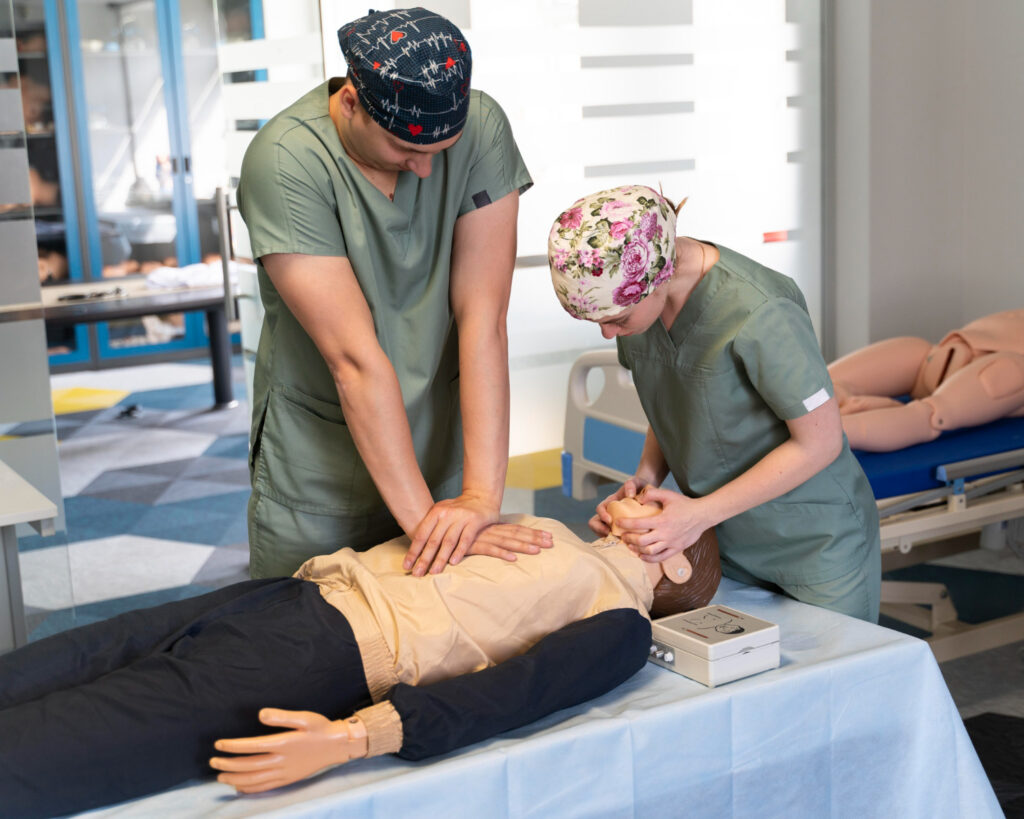
Strong CPR technique is a major part of BLS preparation. We recommend practicing proper hand placement, effective compression depth and rate, full chest recoil, and short pauses between compression cycles. Ventilations also need attention, especially when you are working to maintain a good seal and deliver breaths as taught in class.
Two-rescuer scenarios add another layer. You may be asked to work with another healthcare professional while assigning roles, switching compressors, and preparing equipment. Clear communication keeps the response organized and helps prevent missed steps.
During team practice, use direct language. Confirm what you are doing, state when equipment is ready, and speak up when it is time to switch roles. Helpful phrases can include:
- “I will start compressions.”
- “You call for help and bring the AED.”
- “I am ready to switch compressors.”
- “Continue CPR while I prepare the equipment.”
Instructor-supervised practice gives us a chance to correct technique before formal testing begins. A small adjustment to hand position, compression rhythm, or team communication can make the whole scenario feel more manageable.
Prevent Testing-Day Errors Before They Affect Performance
Many testing-day mistakes are preventable. We often see learners rush through the assessment sequence, forget to say important actions aloud, pause compressions for too long, or lose track of their role during a team response. These errors do not always come from a lack of knowledge. Sometimes they happen because a learner feels pressured and moves too quickly.
Before attending a BLS provider course in Santa Barbara, clinicians should review the course instructions and ask whether there are opportunities for guided practice before skills testing begins. Arrive with your course confirmation details, required identification, and enough time to settle in and focus on hands-on learning.
If something from a demonstration is unclear, ask during the learning activity. We would rather help you correct a misunderstanding during practice than have you repeat it during an evaluation. Taking a brief moment to clarify a prompt, sequence, or equipment step can help you feel more prepared when testing starts.
Choose a Course with Instructor Guidance
Instructor guidance is especially helpful for healthcare professionals who need direct feedback on CPR mechanics and coordinated response skills. Rather than trying to guess whether your compressions, ventilations, or team communication meet course expectations, you can practice those actions with feedback in real time.
At CPR, AED, and First Aid Certifications, we provide instructor-supervised training for healthcare professionals and community members. Eligible participants who complete course requirements may receive certification. Our American Heart Association courses in Santa Barbara give learners a structured setting to prepare for certification or renewal.
Course selection also matters when you need a particular credential. You can find an AHA course that matches your training needs and allows time for hands-on practice before your skills evaluation.
Prepare with a Clear Testing Plan
Skills testing preparation supports the same goal as BLS training itself, being ready to respond when a patient needs immediate care. Review course expectations ahead of time, rehearse CPR and team-response steps, and give yourself enough time to arrive ready to participate.
A clear plan can make testing feel less stressful: know the sequence, communicate your actions, accept instructor feedback, and stay focused on the next appropriate step.
Meet Your BLS Training Requirements
CPR, AED, and First Aid Certifications offers American Heart Association BLS training for clinicians seeking dependable certification. Find a BLS provider course in Santa Barbara that fits your schedule and supports your professional requirements. For help with availability or registration, contact us and our team will assist you.