Understanding CPR Certification in Columbus, OH for Non-Clinical Roles
Why CPR Skills Matter Beyond Clinical Careers
CPR certification in Columbus, Ohio is not only for people who work in hospitals. Sudden cardiac emergencies can happen in offices, gyms, schools, stores, and homes. In many of these places, the first person on the scene is a teacher, coach, manager, or coworker, not a doctor or nurse. When someone nearby knows CPR and how to use an AED, it can buy time until EMS arrives.
Across many non-medical jobs, employers now expect staff to hold current CPR and AED training. Roles like teachers, fitness trainers, childcare workers, security teams, and corporate leaders are often asked for an American Heart Association (AHA) certification card. In this article, we will look at which non-clinical roles benefit from CPR training, which AHA courses fit different jobs, what class day feels like, how long cards last, and how to pick a local class that fits your needs.
Non-Clinical Jobs That Benefit From CPR Certification
In many workplaces around Columbus, CPR certification is part of standard safety training. Some jobs are more likely to require it because they work with children, older adults, or groups doing physical activity.
Common roles where CPR certification is often required or strongly preferred include:
- Teachers and school staff
- Coaches and athletic trainers
- Camp counselors and youth leaders
- Personal trainers and gym staff
- Childcare providers and daycare staff
- Lifeguards and pool attendants
There are also many non-clinical jobs where CPR may not be required by law but is a strong plus. For example:
- Office managers and HR professionals
- Front desk and hospitality staff
- Retail managers and supervisors
- Security personnel in buildings, venues, and events
- Community center and recreation staff
Employers in these roles see CPR-trained staff as part of risk management and overall safety planning. When customers, parents, and employees know there are trained people on site, it builds trust and peace of mind. For non-clinical workers, AHA-based CPR and AED courses are designed for lay rescuers. The focus is on:
- Spotting an emergency early
- Calling 911 quickly and clearly
- Giving firm, steady chest compressions
- Using an AED with simple verbal prompts
You do not need a medical background to learn these steps. Classes are built for everyday people who want practical, hands-on skills.
Choosing the Right AHA Course for Your Role
The AHA offers several course types, and it can sometimes be confusing to know which one you need. The main CPR course families you will see are:
- Heartsaver CPR AED
- Heartsaver First Aid CPR AED
- Basic Life Support (BLS) for healthcare providers
Heartsaver CPR AED is aimed at non-clinical rescuers who need CPR and AED skills, often for adult and child victims. It is a common fit for fitness staff, security teams, and general workplace safety. Heartsaver First Aid CPR AED adds first aid topics, such as how to respond to minor injuries or sudden illness, which is very helpful for:
- Teachers and school staff
- Childcare workers
- Camp counselors
- Office safety or emergency response teams
BLS is typically intended for clinical or healthcare settings, like hospitals and clinics. Non-clinical employees are often unsure if they need BLS, but in most general workplaces in Columbus, Heartsaver-level courses that follow AHA guidelines are what employers request.
In-person, instructor-led classes give you time to ask questions and practice skills with feedback. For someone who does not work in healthcare, that extra coaching builds confidence so you are more prepared if something happens at work or in the community. If you look at class listings, you might see other locations, such as Troy or Uniondale, offering the same AHA course types, which shows how standard these options are across different cities.
What to Expect During CPR Training in Columbus
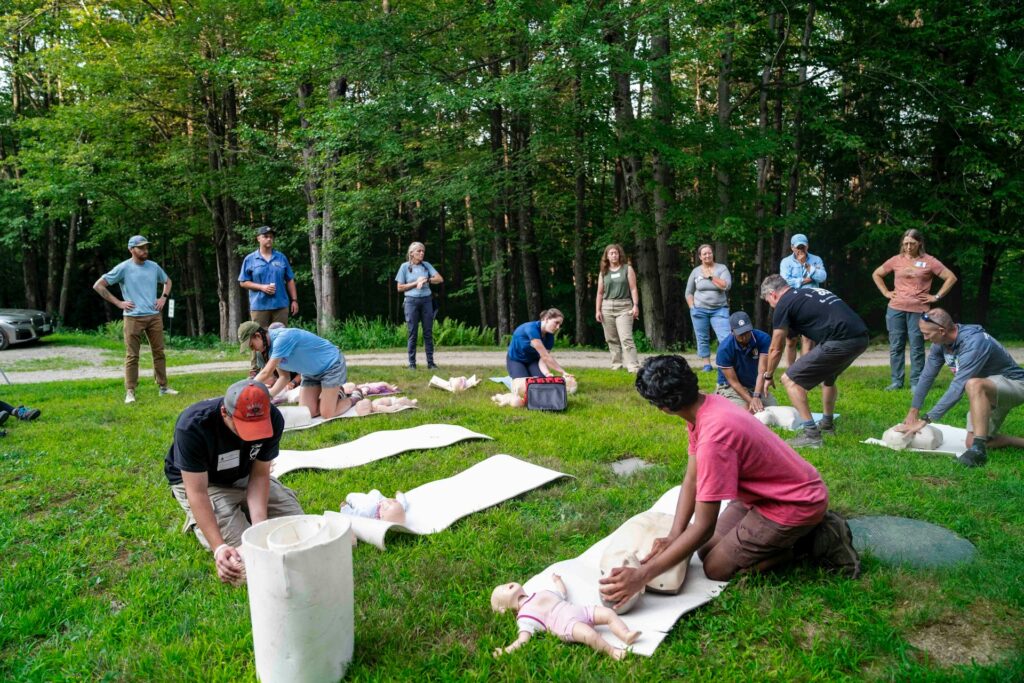
In-person, instructor-led AHA CPR classes in Columbus usually follow a clear, step-by-step format. Before class, you may receive a confirmation email with what to bring and any short pre-class reading or video. Once you arrive, the instructor will go over the plan for the day and review basic concepts in plain language.
A typical class includes:
- Short lessons on how CPR and AEDs work
- Demonstrations by the instructor
- Hands-on practice on adult, child, and sometimes infant manikins
- Practice using a training AED
- Skills testing, and sometimes a simple written quiz
For non-clinical learners, instructors break the process into small, easy steps, such as:
- Checking the scene for safety
- Tapping and shouting to see if the person responds
- Calling 911 or directing someone else to call
- Starting strong, steady chest compressions in the center of the chest
- Turning on the AED and following its voice prompts
Scenarios are often based on everyday places, like offices, gyms, schools, and community centers. This helps you picture what to do in your own setting. At the end of the course, many AHA-aligned providers issue same-day certification cards, so you can meet job requirements without a long wait. Other locations, such as Santa Barbara, follow a similar in-person model, which helps keep training consistent.
How Long CPR Certification Lasts and When to Renew
Most AHA CPR certifications are valid for a set period, often about two years. After that time, skills can fade and guidelines can change. For non-clinical rescuers who do not use CPR often, a refresher class helps bring those steps back to the front of your mind.
In Columbus, many schools, childcare centers, and fitness facilities track expiration dates for staff CPR certification in Columbus, Ohio. They may ask you to provide proof of an active card before each new school year, contract, or performance review. To stay ready and keep your job status clear, it is wise to note your renewal date well in advance.
Renewal options often include:
- Full repeat classes if it has been a long time
- Shorter renewal courses for current cardholders
- Skills check sessions that focus on practice
Because you already know the basics, refreshers usually move faster and leave more time for hands-on work. Planning your renewal before your card expires helps you avoid gaps in compliance and keeps you prepared to step in during an emergency at work, at home, or anywhere in the community.
Take The Next Step Toward Life-Saving Confidence
If you are ready to turn what you have learned into real-world skills, we are here to help you get certified. Use our course finder to schedule your CPR certification in Columbus, Ohio and prepare to respond when every second counts. At CPR, AED, and First Aid Certifications, we focus on practical, hands-on training that fits your schedule. If you have any questions about classes or group training options, please contact us.