Choosing CPR Classes for Raleigh, NC School Staff That Meet AHA Standards
Protecting Students with AHA Compliant CPR Training
When a student or staff member stops breathing or collapses, every second matters. In those first moments before EMS arrives, the people who make the biggest difference are the adults already in the building. When school staff are trained and ready, they can start high-quality CPR, use the AED, and keep a child or coworker stable until help gets there.
That is why American Heart Association (AHA) compliant CPR, AED, and First Aid training is so important. AHA courses follow tested, evidence-based guidelines, clear steps, and standard skills that match what EMS and hospitals expect. For school leaders and nurses choosing CPR classes for school staff in Raleigh, the goal is simple: pick training that meets AHA standards, fits your schedule, and lines up with district rules and safety plans.
Understanding AHA Requirements for School CPR Courses
AHA compliant training is more than just learning chest compressions. It means the class:
- Follows the most current AHA CPR and emergency care guidelines
- Uses official AHA videos, books, and practice checklists
- Is taught by instructors who are approved to teach AHA courses
- Provides an AHA course completion card after all skills and tests are passed
For most school staff, AHA Heartsaver CPR AED or Heartsaver First Aid CPR AED is the right fit. These courses are designed for non-medical people and focus on simple, step-by-step actions. Staff learn how to recognize an emergency, start CPR, use an AED, and give basic First Aid for common school issues.
School nurses, athletic trainers, and other licensed health staff usually need AHA Basic Life Support (BLS) Provider. BLS training covers more advanced skills, such as:
- Team-based CPR with multiple rescuers
- Use of a bag-mask device
- CPR for patients with more complex medical needs
Many districts in North Carolina look for AHA course completion cards, skills testing, and regular renewal. Renewal timelines often match AHA recommendations, so staying within those dates helps schools show they are following current standards. Even when training is done outside Raleigh, like at an AHA location such as this Uniondale training site, the same national guidelines apply.
Matching CPR Classes to Different School Staff Roles
Not every role in a school needs the same level of training. A good plan starts by matching courses to job duties and likely risks.
Heartsaver CPR AED or Heartsaver First Aid CPR AED usually works well for:
- Classroom teachers and assistants
- Coaches and club leaders
- Office and front desk staff
- Bus drivers and transportation staff
- Custodial and security staff
In these classes, non-medical staff practice:
- Adult, child, and often infant CPR
- Use of an AED, including pad placement and safety checks
- Helping choking victims
- Basic First Aid, such as bleeding control, minor injuries, and sudden illness response
School nurses, athletic trainers, and health room aides often need AHA BLS Provider because they are expected to respond at a higher clinical level and coordinate with EMS. BLS is also the right choice if a staff member holds a healthcare license or works closely with medical equipment on campus.
If you have staff who work across districts or attend training in other locations, they might also join sessions at sites like the AHA program in Troy or Santa Barbara. Because AHA standards are national, their cards still match what Raleigh schools look for.
Evaluating CPR Classes for School Staff in Raleigh
When you review CPR classes for school staff in Raleigh, it helps to have a clear checklist. First, confirm that the provider is an authorized AHA training site. This is key if you want AHA course completion cards and consistent instruction.
Next, look at how the class is taught. Strong school-focused programs usually include:
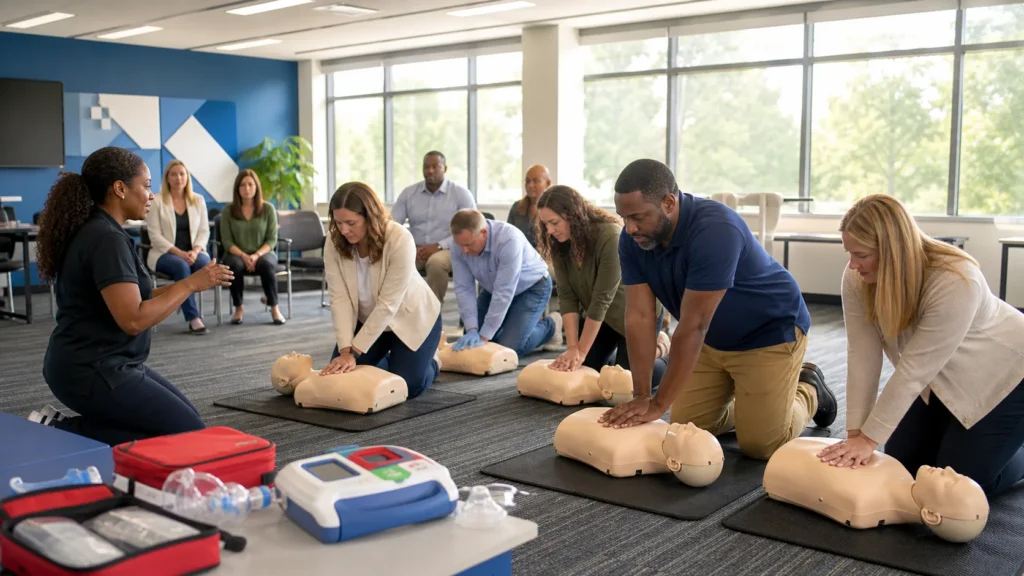
- In-person, hands-on practice with manikins and AED trainers
- Time for each person to perform the full skills, not just watch
- Realistic scenarios that match school spaces, like classrooms, gyms, cafeterias, and buses
Instructor experience also matters. Instructors who have worked with schools understand things like large student groups, sports events, field trips, and dismissal times. Ask about:
- Class size limits, to make sure each staff member gets enough practice
- Whether they can adjust examples to match your age ranges and campus layout
- How they handle skills testing and written tests
Finally, think about records. AHA eCards or physical completion cards should be provided quickly, often the same day, so HR and school nurses can update files. Good providers help with:
- Clear attendance lists
- Easy ways to verify cards
- Reports that support audits, licensing checks, or accreditation reviews
Scheduling Group CPR Training That Works for Schools
Once you know what kind of training you need, the next challenge is timing. Schools run on tight schedules, so CPR must fit into existing workdays.
Common options include:
- Onsite training during teacher workdays
- Sessions on early release days
- Blocks built into professional development
Onsite AHA classes at your school can:
- Reduce travel time for staff
- Make it easier to include more people
- Allow instructors to use your actual AEDs and practice where emergencies might occur
Sending small groups to an offsite training center in Raleigh can work well if:
- You only have a few staff who need BLS or renewal
- Schedules do not line up for one big onsite class
- You want to stagger training through the year
It also helps to plan ahead so certifications do not expire all at once. Many schools:
- Split staff into groups that train in different months
- Track renewal dates for nurses, coaches, and general staff separately
- Add CPR and First Aid training into their yearly safety calendar
Ensuring CPR, AED, and First Aid Skills Stick
Passing the class and getting a card is only the start. In a real emergency, calm action comes from skills that are fresh and practiced.
To keep training strong, schools can:
- Add short CPR or AED refreshers to staff meetings
- Practice AED drills so staff know where the devices are and how to turn them on
- Walk through emergency response roles, like who calls 911, who meets EMS, and who starts CPR
Some AHA training providers also offer:
- Reminder systems for upcoming renewals
- Update sessions when AHA guidelines change
- Optional practice time between full certification courses
When CPR, AED, and First Aid practice becomes a regular part of safety culture, staff feel more confident. Students and families know that the adults around them have up-to-date, AHA-based skills and a clear plan to respond if something goes wrong.
Equip Your School With Lifesaving Skills Today
Give your teachers and staff the confidence to act quickly in an emergency with our tailored CPR classes for school staff in Raleigh. At CPR, AED, and First Aid Certifications, we design training around real situations your school community may face, from playground incidents to athletic events. Explore upcoming classes and scheduling options, and if you have questions about group sessions or on-site training, please contact us.