Strategic AHA Certification Planning for King of Prussia Healthcare Teams
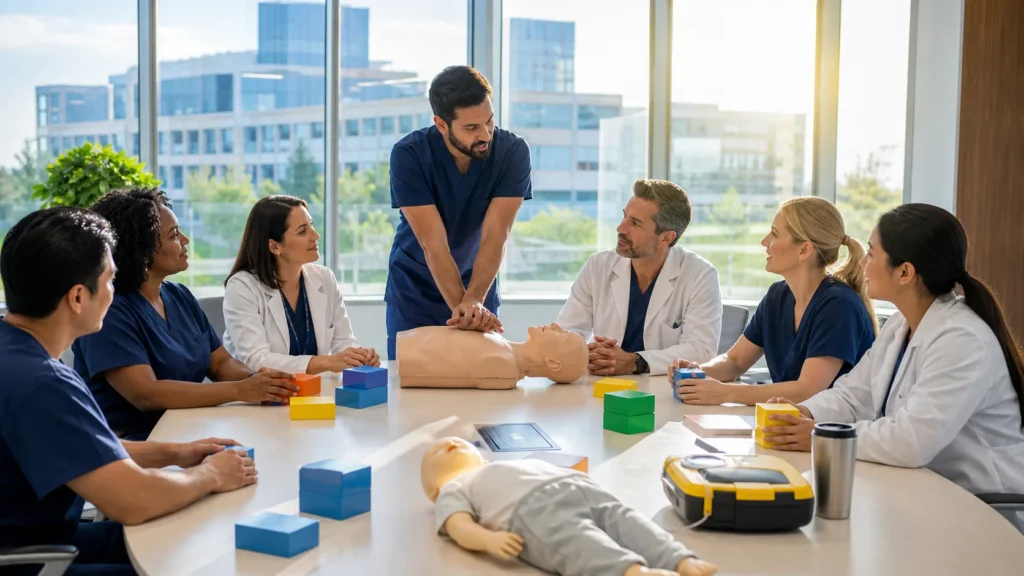
Build Stronger Clinical Teams with Planned AHA Training
Rapid, coordinated action during a cardiac or breathing emergency depends on skill, not luck. For hospitals, outpatient centers, dental offices, and specialty clinics in King of Prussia, planned American Heart Association (AHA) training keeps those skills sharp and consistent across every shift. When teams know exactly what to do, treatment can start faster and patients are not left waiting while staff try to remember the next step.
Structured, ongoing AHA certification in King of Prussia helps every department speak the same “code language.” When everyone knows their role, chest compressions begin on time, AEDs are brought in quickly, and communication stays clear. This kind of planning does not just meet policy; it builds real confidence when seconds feel very long.
Local, in-person classes also matter. Healthcare teams are busy and online-only options often do not give the hands-on practice needed for high-stress emergencies. That is why we focus on live, instructor-led, AHA-aligned training with same-day certification cards, so teams leave each session ready to respond, not just pass a test.
Mapping AHA Certification Needs Across Your Facility
A strong plan starts with knowing who needs what. Different roles often require different AHA course types, based on how they interact with patients and what emergencies they are likely to face.
In many facilities, training needs break down like this:
- BLS Provider: nurses, physicians, respiratory therapists, techs in high-acuity units, and anyone who responds to codes
- Heartsaver CPR AED: front-desk staff, medical assistants, imaging techs, dental assistants, and other clinical support roles
- First Aid: staff who may be first on scene in non-clinical areas like reception, billing, or building services
Some staff may also need more advanced AHA credentials, depending on scope of practice and internal policies. That might include providers who lead resuscitation efforts or work in areas with higher risk of cardiac events.
A quick internal skills-gap review can be simple and still very helpful. Many leaders:
- Pull a list of current certification cards and expiration dates
- Sort by department and role
- Flag high-risk areas, such as surgery, cardiology, outpatient procedure suites, rehabilitation, and long-term care units
As you review, ask one key question for each unit: “What emergencies are most likely here?” For example, medical-surgical floors may need strong team response to in-room codes, while outpatient imaging suites may need fast recognition of sudden collapse in waiting areas. Aligning AHA certification in King of Prussia with real-world scenarios keeps training focused on what staff will actually face.
For ideas on how other locations organize AHA courses, some teams look at how sites like Uniondale or Troy structure their offerings.
Creating a Year-Round Certification and Renewal Calendar
Once you know what each role needs, the next step is building a 12-month calendar. The goal is simple: keep every unit covered, avoid last-minute scrambles, and stay well within AHA timelines and employer rules.
A helpful approach is to group people in smart ways:
- By expiration month, so you renew before cards lapse
- By department, so leaders can plan coverage
- By shift, so days, evenings, and nights all get access to classes
Instead of sending large groups all at once, many facilities stagger sessions over a few weeks. This keeps staffing balanced while still moving everyone through on time. It also allows for make-up classes when someone is out sick or pulled into an urgent case.
We can support recurring on-site sessions in King of Prussia that fit your calendar, not the other way around. Planning a standard rotation, such as monthly BLS Provider and quarterly Heartsaver CPR AED and First Aid, makes tracking simple. Same-day cards reduce paperwork stress, which is especially helpful when credentialing reviews or inspections are on the horizon.
Integrating High-Realism Skills Practice for Better Outcomes
Classroom content is important, but realistic practice is what builds calm, confident responders. That is why scenario-based training aligned with AHA guidelines works so well for clinical teams.
You can tailor scenarios to match your exact setting, such as:
- A code event on a med-surg floor with limited staff in the room
- A sudden arrest in an outpatient procedure area
- A breathing emergency in a dialysis unit chair
- A collapse inside an imaging suite or waiting room
Hands-on drills with manikins and AED trainers give teams a chance to focus on compression depth and rate, quick defibrillation, and clear leadership. When groups practice closed-loop communication, they learn to give and receive instructions in a way that cuts confusion at the bedside.
Experienced instructors can also fold in your own equipment and internal policies. That means using the AED models your staff will actually touch, following your code blue activation process, and rehearsing how to move a patient in your real hallways and rooms. Some facilities even look to examples from other locations, such as Santa Barbara, to see how they adapt AHA-aligned teaching to their layouts.
Using AHA Training Data to Improve Quality and Compliance
Once training is organized, the data behind it becomes a powerful quality tool. Tracking a few simple data points across departments can support accreditation, risk management, and insurance needs.
Key data points often include:
- Who completed which AHA course type
- Certification and renewal dates
- Department, role, and shift for each learner
With this information, you can quickly answer questions during audits and see where gaps may form. For example, you might spot a cluster of expirations in one month or notice that a high-risk area has fewer staff with up-to-date BLS Provider cards than planned.
Some facilities also review code blue performance and resuscitation outcomes alongside training records. When leaders see patterns, they can fine-tune future classes, such as:
- Adding more practice on team leadership
- Putting extra focus on early defibrillation and AED use
- Refreshing airway skills for staff who assist with breathing support
Working with the same local training partner over time can help standardize how skills are taught and checked. It also makes it easier to keep training records accurate and ready when surveyors or credentialing teams ask for proof of AHA certification in King of Prussia.
Turning Your King of Prussia Team Into AHA Response Leaders
A strong AHA strategy does not happen by accident. It starts with a clear look at where your team stands now, from onboarding through advanced departments. When administrators, clinical managers, and practice owners take time to review current certifications, expiration dates, and real risks, they gain a clear map of high-priority gaps in CPR, AED, and First Aid readiness.
From there, a written plan that covers role-based course selection, renewal timelines, and realistic scenario practice helps turn training into a steady rhythm instead of a last-minute rush. With reliable, in-person AHA-aligned instruction built into your calendar, your King of Prussia team can move beyond basic compliance and grow into confident response leaders who are ready when the next emergency happens.
Protect Your Workplace With Proven Life-Saving Skills
If you are ready to equip yourself or your team with trusted, real-world emergency training, we are here to help. Use our course finder to start your AHA certification in King of Prussia and choose the class that best fits your schedule. At CPR, AED, and First Aid Certifications, we focus on practical skills that give you confidence to act when seconds matter. Have questions about group training or custom options? Simply contact us so we can help you plan your next step.