CPR Certification in Raleigh, NC for Remote and Hybrid Workers
Why CPR Certification Matters for Remote Teams in Raleigh
Remote and hybrid work does not remove medical risk. People still meet in offices, coworking spaces, and client sites around Raleigh, NC, and emergencies can happen in any of those places. When someone stops breathing or their heart stops, the people nearby are the real first responders, not EMS.
For employers with a mix of in‑office and remote staff, CPR skills are now a part of basic workplace safety. Trained team members can respond quickly during on‑site meetings, project kickoffs, or client visits. American Heart Association (AHA) CPR, AED, and first aid training gives companies a clear, trusted standard that fits into existing safety policies and risk management plans.
Many HR and safety leaders are now adding CPR certification to their normal onboarding and annual training, right alongside topics like security, harassment prevention, and data protection. It is one more way to protect people while they do their work, wherever that work happens to be.
Unique CPR Risks for Remote and Hybrid Workers
Working from home or in flexible spaces changes where emergencies happen, but it does not lower the stakes. In some ways, risk can even feel closer and more personal for remote employees.
Remote workers are often around other people during the day, such as:
- Family members
- Roommates
- Neighbors dropping by
- Contractors or service providers in the home
If someone nearby has a cardiac emergency, the remote worker might be the only adult on scene. Having CPR skills can help them act instead of freeze while professional help is on the way.
Hybrid workers face their own mix of risks. Even if people are only in the office a few days a week, there are still:
- Team retreats
- Training days
- Quarterly planning meetings
- Company events at off‑site venues
Any time groups gather, there is a chance someone could experience sudden cardiac arrest or choking. CPR and AED skills are just as important at a conference table as in a traditional full‑time office.
Travel adds one more layer. Employees who cover the Raleigh area or anywhere in the state might spend time in hotels, client offices, and public buildings. Emergencies can unfold in a hotel lobby, at a client facility, or in a crowded hallway. When someone on your team has CPR training, they carry those skills with them into every space, not just your main office. If you ever expand teams to other locations, such as near Uniondale or Troy, the same idea will still apply.
What CPR Certification in Raleigh, NC Covers for Modern Workplaces
AHA CPR certification is built around clear, hands‑on skills that regular people can use. Courses for workplace settings focus on:
- Spotting the signs of cardiac arrest quickly
- Performing strong, steady chest compressions
- Giving rescue breaths when needed
- Using an AED with confidence and calm
In many classes, CPR training is paired with AED use and basic first aid. That means employees also learn how to respond to choking, breathing problems, allergic reactions, and sudden injuries that might happen at home or in shared workspaces.
This kind of training fits daily life. A remote worker may find a family member choking at the kitchen table. A hybrid worker may see a coworker collapse in a conference room. In either case, AHA training gives them a simple plan to follow.
Basic Life Support (BLS) is a more advanced course, usually aimed at healthcare and certain high‑risk roles. BLS covers CPR and AED skills in more depth and includes team‑based resuscitation and care for patients in clinical or similar settings. Raleigh employers might choose BLS for:
- Healthcare staff and clinical teams
- Workers in environments with higher medical risk
- Employees who must meet specific industry regulations
For most general office teams, standard workplace CPR, AED, and first aid certification is a strong fit. For roles closer to patient care, BLS often makes more sense.
Flexible CPR Training Options for Remote and Hybrid Staff
One concern many managers have is how to fit CPR certification into scattered schedules. The good news is that modern training formats match modern work styles.
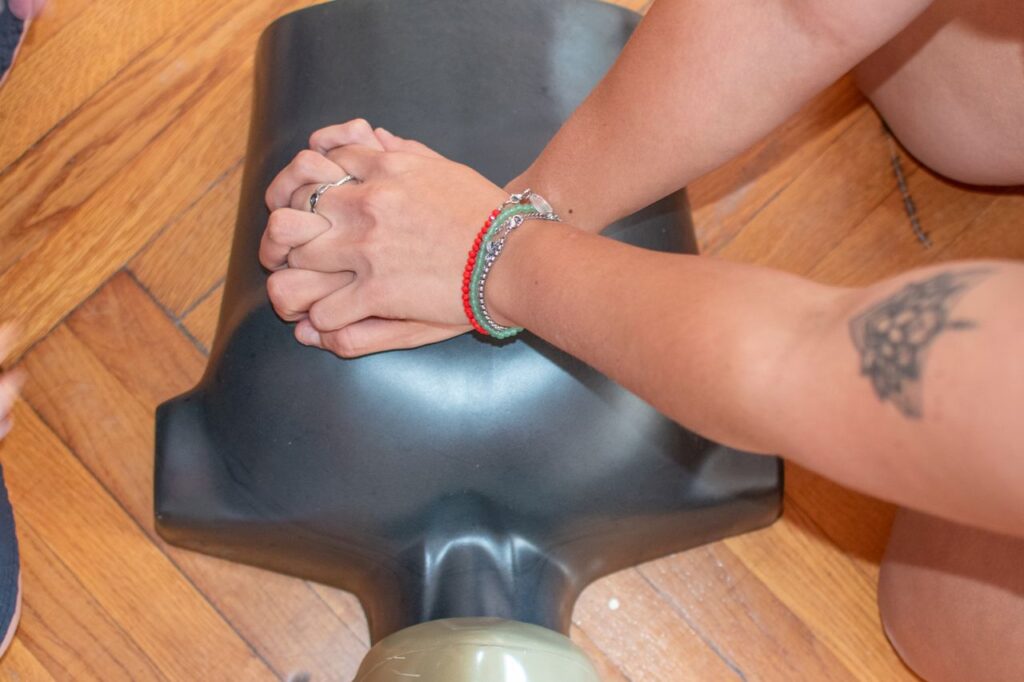
Blended learning is especially helpful. Staff complete an online portion at their own pace, then come in for a short, in‑person skills session. That in‑person time is where they practice compressions, breaths, and AED use on manikins with an instructor coaching them.
Employers in Raleigh can also get creative with how they schedule:
- Host small on‑site classes on days when more people are in the office
- Plan “skills check” days once or twice a quarter
- Line up sessions around existing team meetings or retreats
Same‑day AHA certification cards and simple online enrollment make it easier to include CPR training in onboarding. New hires can be brought into compliance fast, even if they work remotely most of the time. When teams are spread out across different regions, like remote staff near Santa Barbara, the blended model and local skills checks can help keep everyone on the same page.
Choosing the Right CPR Partner for Your Raleigh Company
Not all CPR training is the same. The right partner makes a big difference in both skill level and employee confidence.
When you compare options, look for:
- Clear course labels, such as CPR, AED, first aid, and BLS
- AHA‑aligned programs, so you know the content follows recognized guidelines
- Guidance on which class types match which job roles
Instructor quality also matters. Smaller class sizes and plenty of hands‑on time help people practice until they feel ready, not just rushed. Good instructors explain concepts in plain language and give simple feedback, so even first‑time learners feel supported.
For long‑term planning, it helps when a provider offers:
- Group scheduling support
- Reminders for upcoming renewals
- Convenient class locations for employees coming in from remote work
When HR and safety teams have a reliable training partner, keeping CPR certification in Raleigh, NC current becomes a routine part of your safety program instead of a last‑minute scramble.
Take the Next Step to Protect Your Remote and Hybrid Workforce
For many companies, the first step is a simple review. Look at who is working remote, who is hybrid, and where people tend to gather for meetings, travel, or client work. Note which roles should have CPR, AED, and first aid training and where BLS might be appropriate.
From there, you can set clear goals, such as training key staff in each department or location, and build CPR certification into your normal training calendar. When remote and hybrid employees are prepared to act in an emergency, your safety plan is no longer tied to a single office building. Instead, it follows your people wherever they work, giving your whole organization a stronger, more confident response when every second counts.
Protect Lives With Trusted Local CPR Training
If you are ready to build lifesaving skills that you can rely on in an emergency, we make it simple to find the right class for you. Use our course finder to choose the CPR certification in Raleigh, NC that fits your schedule and experience level. At CPR, AED, and First Aid Certifications, we provide hands-on training that follows the latest American Heart Association guidelines. If you have questions about group classes, workplace training, or upcoming course dates, please contact us.