Decision Traps in First Aid Training Employers in Philadelphia, PA Overlook
Hidden Risks Employers Face When Training Falls Short
When someone collapses at work, everything changes in a few seconds. People freeze, look around, and wait for someone else to take charge. If the only training your team has had is a quick class from years ago, those seconds can slip away fast.
Many employers in Philadelphia think, “We did a CPR class once, so we are covered.” What they do not always see are the decision traps inside that choice. How you pick first aid training in Philadelphia, PA, how often you offer it, and what type of class you choose all affect how your team will act when a real emergency hits. American Heart Association, or AHA, guidelines continue to evolve, and if your training does not keep up, your people may hesitate, your risk grows, and care can be delayed when it matters most.
Mistaking Compliance for Real Readiness
There is a big difference between being technically compliant and being truly ready. Checking a box for OSHA or industry rules does not always mean your staff can respond with calm, quick action when a coworker is not breathing.
Common assumptions we see from employers include:
- Any CPR card is fine
- One class is enough for a whole career
- Only safety or medical staff need training
These views can leave gaps across shifts, departments, and locations. In a real crisis, the nearest person may not be anyone on your “safety team.” It might be a new hire, a supervisor, or a visitor.
AHA-based CPR, AED, and First Aid programs are designed to go beyond the bare minimum. They focus on:
- Strong, effective chest compressions
- Fast, confident use of an AED
- Simple, step-by-step responses to common emergencies
This type of training builds real-world skills, not just paperwork.
Overlooking Scenario-Based Practice in High-Stress Events
Learning in a quiet classroom is one thing. Making decisions when alarms are going off, people are shouting, and someone is on the floor is very different. When stress rises, we fall back on what we have practiced, not what we watched in a video.
One major decision trap is choosing training that relies mostly on lecture and videos. That can produce high quiz scores, but when a real emergency happens, people can still freeze, forget the order of steps, or lose track of who should do what.
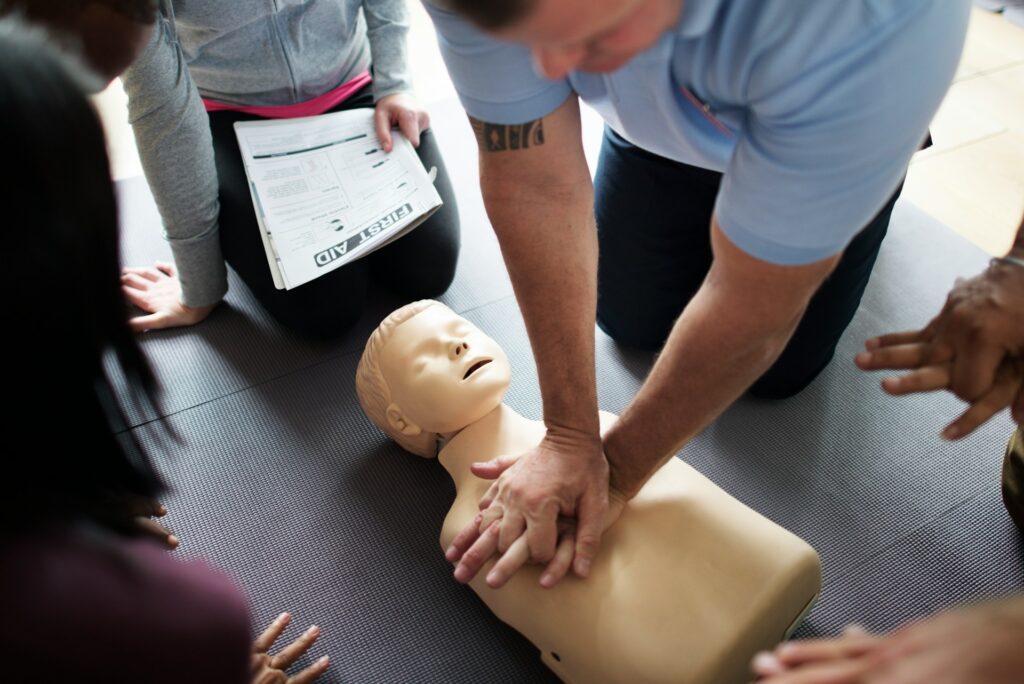
Hands-on practice built on AHA guidelines changes that. Strong first aid training in Philadelphia, PA, should include:
- Realistic role-play with manikins and AED trainers
- Timed drills that practice fast recognition and response
- Clear team roles, like “compressions,” “AED,” and “crowd control”
When people have walked through these scenarios, even a few times, they are more likely to act instead of wait for someone “more qualified.” Multiple locations, such as our AHA classes near Uniondale and Troy, use this same approach to build confidence under pressure.
Ignoring the Needs of Diverse Workforces and Roles
Many employers choose one generic class for everyone. That sounds simple, but it often overlooks how different jobs face different risks. An office, a warehouse, a school, and a healthcare setting do not face the same daily hazards.
Key questions to think about include:
- Do desk workers have different likely emergencies than forklift operators?
- Do some staff travel alone or work off-site?
- Are there language barriers that could slow down response?
- Do some employees have physical limits that affect how they give CPR?
Good AHA CPR, AED, and First Aid courses can be tailored to match the environment. For example, a warehouse group may spend more time on heavy bleeding and crush injuries, while an office group might focus more on cardiac arrest, choking, or sudden illness.
Class content can also be adjusted to match:
- Actual workplace layouts and where AEDs are located
- Common shift patterns and staffing levels
- Realistic scenarios that are more likely to happen in that setting
This type of tailoring, which we also apply at locations like our Santa Barbara training site, helps training feel relevant instead of generic.
Underestimating the Cost of Lapsed and Outdated Skills
Another trap is treating CPR and first aid training as “one and done.” Skills fade if they are not refreshed. People forget the correct compression depth, pause too long between breaths, or second-guess how to turn on and use the AED.
When staff go years without practice, you often see:
- Slower recognition of cardiac arrest
- Uncertainty about who should call 911 and who should start CPR
- Confusion about updated AHA guidelines
For a Philadelphia employer, that is not just a safety problem. It can become a business risk if a preventable death or serious injury occurs and workers were not current on training that could have changed the outcome. Regular refreshers keep both skills and confidence alive.
Choosing the Wrong Format for Your Workplace Realities
Many employers pick a training format based only on price or a single date that seems easy. But the right format should match how your workplace actually runs.
Common formats include:
- Group in-person AHA classes at your site
- Blended learning with online coursework plus in-person skills checks
- Same-day certification options to keep projects moving
Each format has pros and cons. For workplaces with high turnover or 24-hour operations, flexible on-site group classes can hit the most people with the least disruption. For professional staff with tight schedules, blended learning may be a better fit, as long as the hands-on skills portion is not rushed.
The goal is simple: make sure enough people across roles and shifts are trained, confident, and up to date. A thoughtful training plan means that the person closest to an emergency can do more than just shout for help.
Protect Your Community With Life-Saving Skills
Invest a few hours today to gain the skills that can make the difference in an emergency. Explore our upcoming classes and enroll in first aid training in Philadelphia, PA that fits your schedule and comfort level. At CPR, AED, and First Aid Certifications, we provide hands-on, practical instruction so you feel confident stepping in when it matters most. If you have questions or need help choosing the right course, please contact us.