Deciding on BLS Training in Warren, MI for Hospital Staff
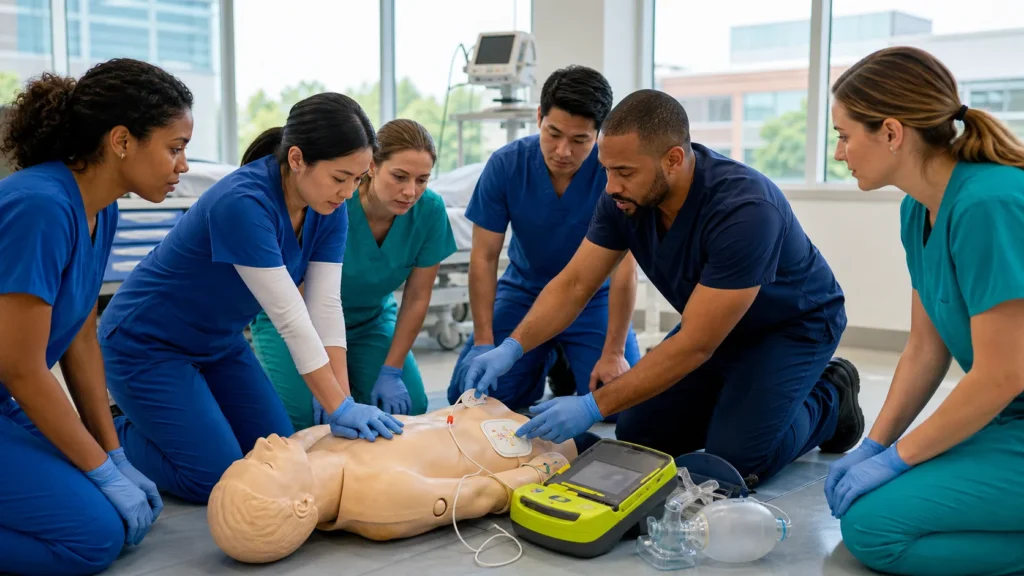
Why Warren Hospital Teams Depend on BLS Skills
When a code blue is called in a Warren, Michigan hospital, every second matters. The quality of Basic Life Support in those first moments can shape what happens next for the patient, the team, and the family standing outside the room. That is why hospital leaders put so much focus on strong BLS training and regular refreshers for their staff.
BLS for hospital staff is more than a simple CPR. It includes high-quality chest compressions, effective ventilations, quick use of an AED, clear team communication, and care for adults, children, and infants. Choosing the right BLS training in Warren, Michigan affects clinical outcomes, compliance with facility policies, and how confident staff feel walking into a code. American Heart Association (AHA) BLS courses give teams a common, evidence-based playbook that hospitals across the country recognize and trust.
What Hospital Leaders Should Expect From AHA BLS Training
An AHA BLS Provider course is built around the skills hospital staff need on the floor, in the ED, and in procedure areas. Core skills include:
- Spotting cardiac arrest quickly and activating the emergency response
- Checking responsiveness, breathing, and pulse in a structured way
- Delivering compressions and breaths at the right rate and depth
- Using an AED and following prompts while staying organized as a team
BLS goes deeper than layperson CPR. Community CPR is usually focused on hands-only skills, basic breaths, and calling emergency services. BLS for healthcare workers adds:
- Detailed AHA algorithms for one-rescuer and two-rescuer care
- Use of barrier devices and other equipment often found in hospitals
- Integration with rapid response and code teams that provide advanced life support
AHA training also sets clear performance targets, such as:
- Compression rate and depth that match current AHA science
- Minimal pauses so blood flow is not interrupted
- Ventilations that avoid over-delivery of air
These habits give hospital staff a clear standard to aim for every time they practice, which can support better survival for in-hospital cardiac arrests.
Key Factors When Choosing BLS Training in Warren, Michigan
When hospitals choose a training partner, acceptance and alignment are the first questions. AHA-based programs are widely recognized by Warren and Metro Detroit hospitals, long-term care settings, and outpatient centers that want consistent, evidence-based care at the bedside.
Course format also matters for operations. Instructor-led classes are fully in-person, which some teams prefer for discussion and feedback. Hybrid BLS courses combine online learning with an in-person skills check. This can:
- Cut down time away from the unit
- Let staff complete the online piece on a flexible schedule
- Keep the hands-on practice that AHA requires
Logistics are another big part of the decision:
- Can classes be scheduled around day, afternoon, and night shifts?
- Are on-site sessions available so whole units can train together?
- Is same-day certification offered so new hires can meet deadlines quickly?
Many hospitals also look at whether a training site teaches BLS in multiple locations, which helps large systems. For example, our AHA training options near areas like Troy can support hospitals that draw staff from across the region.
How Quality BLS Training Impacts Hospital Safety Culture
Strong BLS skills are part of a larger safety culture. When staff renew BLS on a regular schedule, it keeps fast response and teamwork in the front of their minds. Codes become less about panic and more about each person stepping into a role they know well.
AHA-based scenarios are designed to mirror real hospital situations, such as:
- Cardiac arrest in a med-surg room with limited space
- A patient arresting while being transported between units
- A code starting in radiology or another off-unit department
Practicing these events in training builds muscle memory for who starts compressions, who manages the airway, who handles the AED, and who communicates with the code team. The benefits can include:
- Less hesitation when a patient stops breathing or loses a pulse
- Clearer, calmer communication as help arrives
- More useful debriefs after events, because the team shares common language and steps
Hospitals that already send staff to AHA classes in places like Uniondale or Santa Barbara know how this shared training can support a consistent safety mindset system-wide.
Matching BLS Courses to Different Hospital Roles
Many roles in a hospital need current BLS. Facilities often include:
- Registered nurses and licensed practical nurses
- Respiratory therapists, physicians, and advanced practice providers
- Patient care techs and monitor techs
- Pharmacists and rehabilitation staff in patient care zones
- Some non-clinical workers who spend time in high-risk areas
Different departments can face different BLS situations. For example:
- ICU and step-down units see more complex patients with lines and equipment
- ED teams need to switch fast between pediatric and adult algorithms
- PACU and procedural areas may manage airways and sedation-related events
- Behavioral health units must balance safety and environment when a code is called
Standard AHA algorithms help everyone speak the same language across units. BLS also connects with other hospital courses. ACLS and PALS build on the same foundation of good compressions, breaths, and early defibrillation. First Aid and community CPR reach beyond the hospital, but BLS stays at the core for patient-facing staff.
FAQs About BLS Training for Warren Hospital Staff
What is the difference between BLS and standard CPR training, and why do hospitals specifically require BLS?
BLS is designed for healthcare workers and includes deeper assessment, more detailed steps, and team-based care. Hospitals ask for BLS so staff can work smoothly with code teams and advanced life support.
How often do hospital staff in Warren, Michigan need to renew their AHA BLS certification, and what happens if a card expires?
AHA BLS cards are time-limited, and hospitals usually set renewal schedules to match that timeframe. If a card expires, staff may need a full Provider course again instead of a shorter renewal, depending on facility policy.
Is hybrid BLS training accepted by local hospitals as long as it follows AHA guidelines and includes an in-person skills check?
Many hospitals accept hybrid BLS as long as the course is AHA-based and includes a live skills session with an instructor. Staff should always confirm with their employer or credentialing office.
Can entire units or departments schedule group BLS sessions on-site to reduce overtime and staffing disruptions?
Yes, many hospitals plan group sessions on-site so teams can train together and managers can better cover patient care during class times.
How long does a typical BLS course take, and is same-day certification available for new hires or staff who are overdue?
A full AHA BLS Provider class and renewal options are structured to fit into a manageable block of time. Many training sites issue same-day certification cards once staff successfully complete both the knowledge and skills parts.
Build Lifesaving Confidence With Local BLS Certification
Protect your coworkers, loved ones, and community by getting certified with CPR, AED, and First Aid Certifications. Explore upcoming classes and secure your spot for BLS training in Warren, Michigan so you are prepared to act when seconds count. If you have questions about scheduling, group classes, or custom training options, contact us and we will help you choose the right course.