Designing CPR Classes for Daycare Workers in Troy to Meet AHA Standards
CPR Confidence for Every Childcare Classroom
CPR skills are just as important in a daycare as outlet covers and secure gates. When a child chokes on food, has trouble breathing, or suddenly collapses, daycare workers are the first line of help. That is why CPR classes for daycare workers in Troy need to focus on infant and child care, not just general adult CPR.
At CPR, AED, and First Aid Certifications, we follow American Heart Association (AHA) standards so staff learn a clear, proven way to respond. AHA guidelines help turn fear and confusion into calm, step-by-step action. Well-designed training brings those guidelines into real daycare life, with hands-on practice, age-specific scenarios, and same-day certification that meets both regulations and parent expectations.
Understanding AHA Standards for Childcare CPR
AHA guidelines give daycare staff a simple system to follow when every second feels stressful. For infants and children, the signs of cardiac arrest or a life-threatening emergency can look different than in adults. Workers learn how to quickly recognize when a child is unresponsive, not breathing normally, or showing signs that CPR should begin.
Key CPR skills we focus on include:
- Correct hand placement for infant and child compressions
- Safe compression depth and rate for smaller bodies
- When to call 911 and when to start CPR immediately
- How to combine compressions and breaths in the right pattern
The AHA chain of survival also fits daily life inside a daycare. Staff practice how to:
- Spot trouble early, like sudden silence during play or mealtime
- Call for help within the center and activate 911
- Start high-quality CPR right away
- Use an AED if available while CPR continues
- Support the child until EMS arrives
When CPR, AED, and First Aid classes match current AHA standards, daycare programs are better prepared to meet many licensing and best-practice expectations. Directors can show that staff have training based on nationally recognized guidelines, not random tips or outdated habits. Local teams can see what that looks like through our AHA courses in Troy and other areas.
Customizing CPR Classes for Daycare Workers in Troy
Daycare work is not the same as working in an office or a warehouse, so CPR training should not be one-size-fits-all. CPR classes for daycare workers in Troy work best when they include everyday childcare situations staff already know.
Common scenarios we build into training include:
- Mealtime choking at the table or in a high chair
- Breathing problems during naptime when lights are low
- Playground falls or head injuries outside
- Sudden allergic reactions after snacks or crafts
We put special attention on infant and child CPR, since that is who workers care for all day. Staff practice one-rescuer skills, where a single person must do compressions, give breaths, and call for help. We also practice two-rescuer techniques, so teams learn how to switch roles smoothly without losing compression quality.
Training can also be shaped around staff roles:
- Teachers who are with children all day
- Aides who float between rooms
- Front-desk staff who call 911 and guide EMS into the building
For Troy-area centers, practical planning matters too. On-site group classes help more staff learn at once, without long travel. Sessions can be scheduled around shifts, nap times, and staff meetings, and AHA course timelines can fit into yearly training calendars so no one falls behind.
Hands-On Practice That Builds Real Emergency Skills
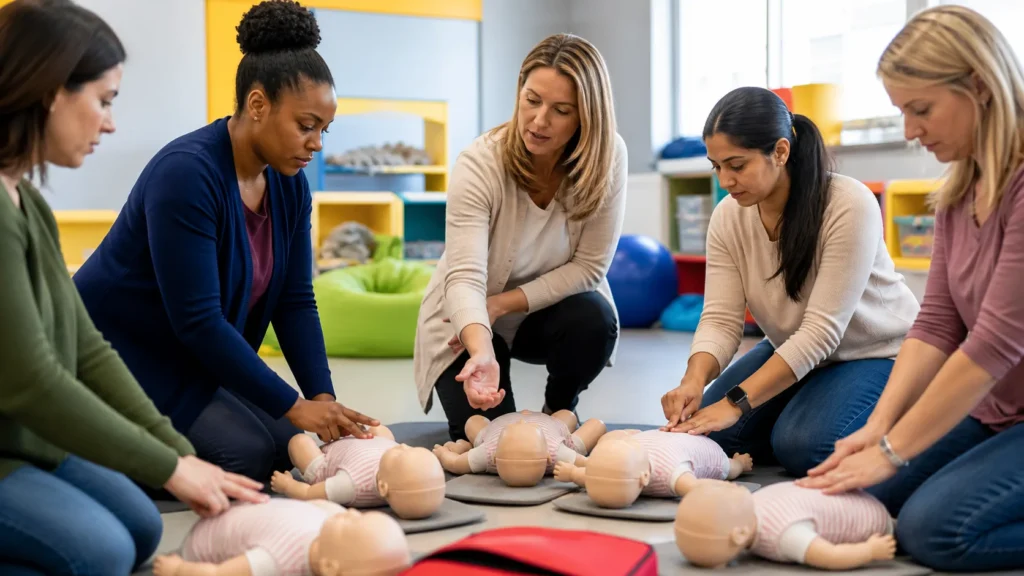
Good CPR is a physical skill. You cannot learn it from a slide show alone. That is why AHA-focused classes rely on hands-on practice with infant and child manikins that match real sizes and body shapes.
With these manikins, daycare workers can:
- Feel what proper compression depth is like for infants and children
- Learn correct hand and finger placement for tiny chests
- Practice gentle but effective rescue breaths
- Work through full scenarios from check, call, and care
Repetitive practice is key. Staff do each skill several times with immediate feedback from instructors. Timing drills help workers get used to the rhythm of compressions and breaths so that, under stress, their bodies remember what to do.
AED training is another important part of daycare-focused classes. Workers learn:
- How to recognize when an AED should be used on a child
- Where to place pediatric pads when they are available
- How to safely use adult pads if pediatric pads are not on site, following AHA guidance
- How to stay calm and follow the AED voice prompts without pausing CPR longer than needed
These same skills are taught consistently in our AHA classes across locations, from Uniondale to Troy, so staff who move between centers can rely on a familiar approach.
Meeting Daycare Regulations and Parent Expectations
Parents trust daycare staff with the most important people in their lives, and regulators expect safety plans to match that level of trust. CPR, AED, and First Aid training based on AHA standards supports common licensing and accreditation rules that call for trained caregivers on site.
Centers can use AHA-based certifications to:
- Show that staff are trained in current pediatric CPR and First Aid
- Maintain clear records for inspectors and accrediting groups
- Prove that emergency skills are not just a one-time event
Visible training also helps parents feel safer. Families notice:
- Current CPR, AED, and First Aid cards displayed in staff areas
- Written training schedules that include recertification
- Staff who can explain what would happen if a child has an emergency
Guidelines do change over time, so regular recertification and skills refreshers are important. Ongoing classes help staff stay current with AHA updates and review childcare-specific steps, instead of trying to remember what they learned long ago in a general class somewhere else, such as at an AHA session in Santa Barbara.
Fast, Same-Day Certification That Keeps Staff on Track
Daycare teams are busy, and pulling staff from classrooms for long periods is hard. AHA-recognized, same-day certification cards let workers finish their class and walk away with proof of training right away. This keeps everyone on track with deadlines and makes it easier for directors to keep records up to date.
Blended learning options can help too. Staff can complete online learning for the theory parts, then come together for an in-person skills session where instructors check CPR, AED, and First Aid performance. This format keeps AHA standards in place while shortening the time away from the children.
To keep coverage solid year-round, many centers plan training cycles. A thoughtful plan might include:
- New-hire classes so fresh staff are not working without CPR training
- Regular recertification dates for long-term employees
- Extra sessions for substitutes and floaters
- Reminders to renew before cards expire
When CPR classes for daycare workers in Troy are designed with AHA standards, real childcare scenarios, and practical scheduling in mind, every classroom is better prepared for the emergencies no one wants but everyone must be ready to face.
Protect Your Daycare With Trusted CPR Training Today
If you care for children in Troy, the right training can make all the difference in an emergency. Explore our CPR classes for daycare workers in Troy to meet state requirements and give families greater peace of mind. At CPR, AED, and First Aid Certifications, we provide hands-on, practical instruction tailored to real-world daycare situations. If you have questions about scheduling or group options, please contact us.