Evaluating CPR Classes for School Staff in Raleigh for Real Emergencies
Why High-Quality CPR Training Matters for Schools
CPR, AED, and First Aid skills are not just for hospitals or ambulances. They are everyday tools that can save a life in a school hallway, on the playground, or during a sports event. Students, staff, and visitors of all ages move through the building all day, and a medical emergency can happen at any time.
Fast and effective action can make a real difference in emergencies like sudden cardiac arrest, choking, allergic reactions, or injuries during gym class. When staff know what to do, they can start care while emergency services are on the way. That calm, confident first response can help keep a bad situation from getting worse.
At CPR, AED, and First Aid Certifications, we provide American Heart Association (AHA) CPR, AED, First Aid, and BLS training with same-day certification. We tailor our classes to the needs of school staff and school health teams, including those working in and around Raleigh and in other areas where we train, such as Uniondale, Troy, and Santa Barbara.
What to Look for in CPR Classes for School Staff in Raleigh
Not all CPR classes for school staff in Raleigh are the same. When you choose a course for your campus, it helps to start with programs that follow current AHA guidelines. AHA-compliant classes are built on science-based steps that are widely accepted in healthcare and education.
Strong school-focused training usually includes:
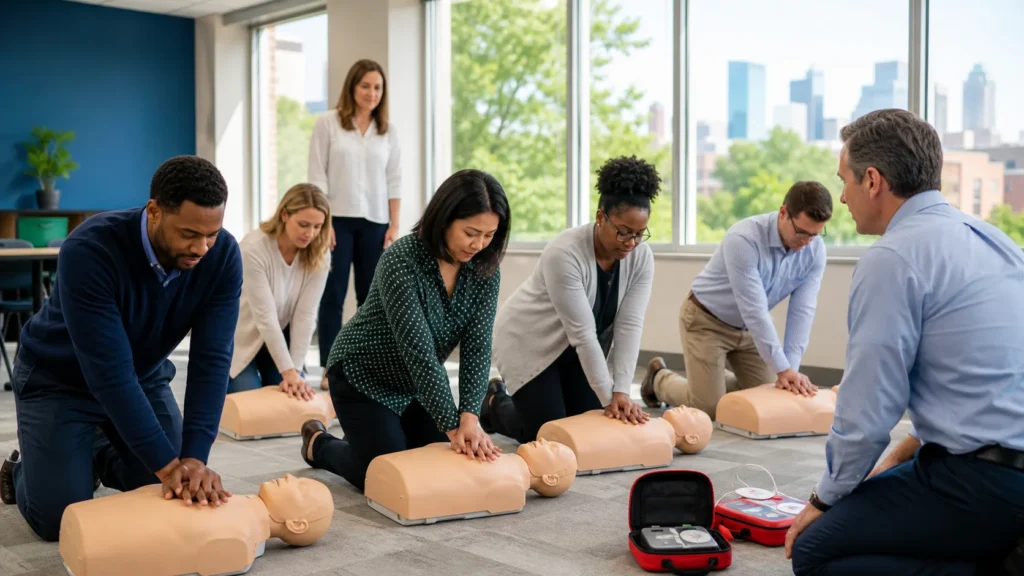
- Hands-on practice on adult, child, and infant manikins
- Real-time feedback on compression depth and speed
- Clear, simple steps for AED use and basic First Aid
- Practice with a partner or small group to build confidence
The best CPR classes for school staff in Raleigh are designed with school spaces in mind. Staff should learn how to respond in:
- Classrooms and resource rooms
- Cafeterias and common areas
- Playgrounds and sports fields
- Buses, parking lots, and front offices
Same-day certification cards are also helpful. Many districts, state agencies, and professional licenses require proof of current CPR, AED, and First Aid or BLS training. When staff receive their cards on the same day as class, they can meet those requirements without delays.
Evaluating Instructors and Teaching Methods for Real Emergencies
When you choose a training provider, the instructor matters just as much as the curriculum. Schools benefit from instructors who have real-world emergency response experience and who regularly teach AHA CPR, AED, First Aid, or BLS classes to educators and school nurses. These instructors understand how emergencies feel in a school setting, not just in a textbook.
Look for teaching methods that go beyond watching videos and taking a short quiz. Strong, practical courses often include:
- Scenario-based practice, like a collapse in a classroom or on a field
- Role-plays that include calling 911 and sending for the AED
- Skills check-offs where each person performs CPR and AED steps
- Coaching on staying calm, speaking clearly, and working as a team
Low student-to-instructor ratios are also very helpful. When class sizes are reasonable, each staff member has time to ask questions, repeat skills, and receive personal feedback. That extra attention helps build real confidence for real emergencies.
Matching Course Types to Different School Roles
Different roles on campus call for different types of CPR and First Aid training. One size does not always fit all. A good training plan matches the course level to the work staff actually do every day.
Common course options for schools include:
- AHA BLS for school nurses and other health professionals
- CPR/AED and First Aid for teachers, office staff, and classroom aides
- Focused CPR and AED training for coaches and activity leaders
Within those options, content can be shaped around school-specific risks, such as:
- Sports-related cardiac events and injuries during games or practice
- Playground falls, fractures, and cuts
- Lab accidents in science classrooms
- Choking and allergic reactions in cafeterias and snack areas
AED practice is also an important part of CPR classes for school staff in Raleigh. Staff should train with AED trainers that closely match the devices installed on campus. Knowing how the buttons look, how the pads connect, and where the nearest AED is located makes it easier to respond quickly when seconds feel long.
Scheduling CPR Classes Around School Needs
School schedules are busy, so CPR, AED, and First Aid training has to fit around classes, meetings, and student events. Many schools like to schedule on-site training at the school itself or at a nearby training center that is easy for staff to reach.
Helpful scheduling options can include:
- Teacher workdays
- Early-release days
- Designated professional development time
- Summer or break sessions for full staff groups
It also helps to think past this year. CPR and First Aid certifications need regular renewal, and new staff join the team over time. Planning recurring CPR classes for school staff in Raleigh keeps certifications from expiring and makes sure every new hire is trained as soon as possible. Coordinating with the training provider on rosters, recertification dates, and documentation can help the school meet district rules and state requirements without last-minute stress.
Turning CPR Certification Into a Schoolwide Safety Plan
CPR, AED, and First Aid cards are powerful tools, but they work best when they are part of a larger safety plan. Schools can build written emergency response plans that list who does what in situations like cardiac arrest, severe bleeding, asthma attacks, or anaphylaxis. That way, everyone knows their role before anything happens.
Strong plans usually include:
- Clear roles for CPR providers, AED runners, and 911 callers
- Steps for student supervision during an emergency
- Information on where AEDs, First Aid kits, and emergency meds are kept
- Simple communication plans for front office staff and administrators
Regular drills help trained staff put their skills into action. These practice sessions can mix CPR and AED use with communication, crowd control, and guiding emergency responders to the right place. Over time, this kind of practice builds a culture where staff feel ready to act and students know adults are prepared to help.
By working long term with an American Heart Association training provider like CPR, AED, and First Aid Certifications, schools can keep skills fresh, update policies as guidelines change, and support a campus culture where quick, confident response is part of everyday safety.
Equip Your School Staff With Life-Saving CPR Skills
Give your teachers and staff the confidence to act quickly in an emergency with our accredited CPR, AED, and First Aid certifications. Explore our available CPR classes for school staff in Raleigh to find a convenient time and location that fits your schedule. If you have questions about group training, scheduling, or certification requirements, contact us so we can help you build a safer school community with CPR, AED, and First Aid Certifications.