Comparing CPR Classes for School Staff in Raleigh NC
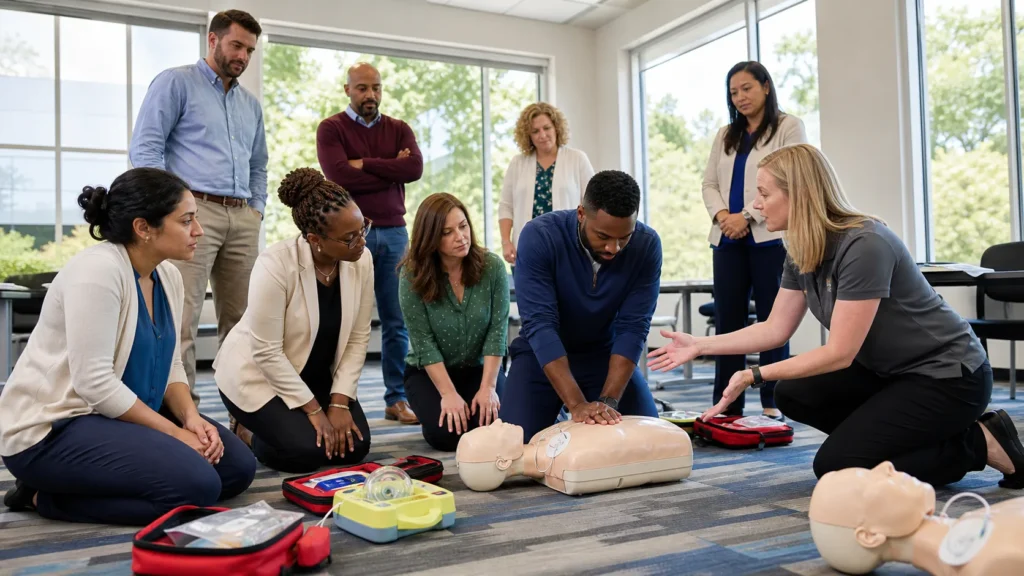
Make CPR Training a Strength for Your School Community
Every adult on a school campus should be ready to act when a student, visitor, or coworker collapses or stops breathing. When CPR starts quickly, it can keep blood and oxygen moving until advanced help arrives. That can make a real difference while everyone is waiting for EMS.
More districts now ask or require CPR, AED, and First Aid training for teachers, coaches, bus drivers, and support staff. But CPR classes for school staff in Raleigh are not all the same. The American Heart Association, or AHA, offers several different course types, and training providers deliver them in different ways. In this article, we will look at how to compare formats, content, certification cards, and provider support so your schools are ready and in line with district expectations.
What School Leaders Should Expect From CPR Courses
School leaders need training that fits policies, state expectations, and real campus needs. A good first step is making sure any class you choose clearly follows district or state rules related to CPR and AED training for staff who work directly with students.
To keep things on track, administrators should look for:
- AHA-compliant courses that are widely recognized by school boards and nursing staff
- Written documentation, rosters, and clear certification records
- Course titles that match what HR and health services request
Accurate records matter during audits, inspections, or after an incident. You want proof of who is trained, in what course, and when their card expires.
Hands-on practice is just as important. School staff should not just watch a video and sign a sheet. They should practice skills using quality manikins, real AED trainers, and active coaching from an instructor. Ask how much of the class time is spent:
- Practicing compressions and breaths
- Using the AED trainer
- Working through campus-style scenarios in gyms, classrooms, cafeterias, playgrounds, and buses
Most schools also have mixed groups in a single class. You may have teachers, coaches, front office staff, bus drivers, custodians, cafeteria staff, and school nurses in the same room. The right CPR course will use examples and practice that speak to each of these roles. For instance, coaches may focus more on sports settings, while office staff may practice in a lobby setting.
Comparing CPR Class Types for School Staff in Raleigh
The AHA offers different course levels, and knowing which one fits each role helps you avoid confusion. Heartsaver-style CPR/AED classes are designed for lay rescuers, which means people who are not medical professionals. These courses focus on simple, strong skills like pressing hard and fast in the center of the chest, using an AED, and helping a choking victim.
AHA Basic Life Support, or BLS, is built for healthcare professionals and those who work in clinical-style roles. It covers team-based resuscitation, bag-mask use, and more technical skills. In a school setting:
- BLS is often the right choice for school nurses, athletic trainers, and some special education staff
- Heartsaver-style CPR/AED is usually enough for teachers, coaches, and support staff
To avoid problems later, it is smart to confirm the exact AHA course your district health services or HR office wants for each job title. Requirements can be very specific.
You can also choose how the class is delivered. Fully in-person courses keep all learning and skills on the same day. Blended learning splits things up so staff complete an AHA online module at their own pace, then attend a shorter, in-person skills session. For many schools, blended learning can cut down on time away from classrooms while still meeting AHA hands-on rules.
On-site group training at the campus is often easier than sending people one by one to outside locations in Raleigh. Ask potential partners how often they train schools, districts, or youth programs. You can even look at how they manage other locations, such as their AHA offerings in places like Uniondale or Troy, to see how they support different communities. Also confirm:
- Whether they can teach during in-service days, staff meetings, or after-school times
- How quickly AHA cards are issued
- Whether the card clearly shows the AHA course title and expiration date
Essential Course Content for School Emergency Readiness
Not every CPR course spends equal time on the skills that matter most in a school setting. For campus readiness, staff should clearly practice:
- Adult CPR with compressions and breaths
- Child CPR and how it differs from adult care
- Use of an AED on adults and children
- Relief of choking in adults, children, and infants
Training should help staff spot cardiac arrest fast and start compressions without waiting for someone “more qualified.” Ideally, AED practice includes the same model used in your school so staff feel comfortable grabbing and using the real device in the hallway.
Pairing CPR and AED with first aid training gives staff an even stronger base. First Aid topics that are especially useful for schools include bleeding control, shock, allergic reactions, and common injuries. Hands-on practice with epinephrine auto-injector trainers and bleeding control skills supports school health procedures and helps staff feel more prepared when they see a serious injury on the playground or during a game. When comparing courses, look for those that speak directly to playground incidents, sports events, and cafeteria emergencies.
CPR training also gives schools a chance to strengthen team response. During training, staff can talk about:
- Who calls 911 and who starts CPR
- Who retrieves the AED
- Who meets EMS at the entrance
- How coverage works for each wing, building, gym, or field
Some AHA instructors can walk through your emergency action plan with you and practice team-based drills. You can also ask how they support other communities, such as their classes in Santa Barbara, to understand how they handle varied school layouts.
Practical Factors When Selecting a Raleigh Training Provider
Even the best course will not help if it does not fit your schedule. School leaders in Raleigh can plan CPR classes for school staff around professional development days, early release days, or after-school windows. Flexible start times and blended skills sessions can make it easier to spread training across planning periods or late afternoon blocks. Districts with several campuses may prefer multiple small sessions so each site can keep enough staff on duty.
It also helps to think ahead about how many staff you want to train at once and how often. Group sessions can keep everyone on the same renewal cycle, which makes planning easier for HR or safety coordinators. When you ask for quotes, request a clear breakdown of:
- Any AHA online modules
- In-person skills sessions
- Certification card processing
Recordkeeping and renewals are another key piece. A strong provider will process AHA cards quickly and offer simple options if someone loses a card. Even more helpful is support with tracking expiration dates and planning renewals before large groups fall out of compliance. Schools benefit when partners also explain any AHA guideline updates and suggest short refreshers or practice between full renewal classes so skills stay sharp across the entire cycle.
Equip Your School Staff With Lifesaving CPR Skills
Give your teachers and support staff the confidence to act quickly in an emergency with our tailored CPR classes for school staff in Raleigh. At CPR, AED, and First Aid Certifications, we design training that fits your school’s schedule and real-world needs. Reach out to our team to discuss class options or group sessions, or contact us today to start planning your training.