Infant CPR Class in Arlington, VA: What to Look For Before Enrolling
Give Your Baby the Safest Possible Start
Learning infant CPR before your baby arrives is one of the most practical things you can do to feel calmer during those first months at home. Emergencies with babies can happen quickly and often with no warning. When you already know the steps, you are not starting from zero in a scary moment.
Many expecting families in Arlington, VA, are adding infant CPR to their prenatal to-do list as they plan for travel, cookouts, and time with babysitters and grandparents. To make it easier, we like to think of it as a prenatal checklist: a short list of what to look for in infant CPR classes in Arlington, VA so your class fits your family, your schedule, and your comfort level.
Why Every Expecting Family Needs Infant CPR Skills
Infant emergencies often happen at home and during everyday routines. A baby can choke on a small piece of food, have trouble breathing, or stop breathing because of an illness. These moments are rare, but they are high-stress.
Infant CPR is not just “smaller adult CPR.” Babies have:
- A smaller, softer airway
- Different head position needs
- Gentler, fingertip chest compressions
- A different ratio of compressions to breaths
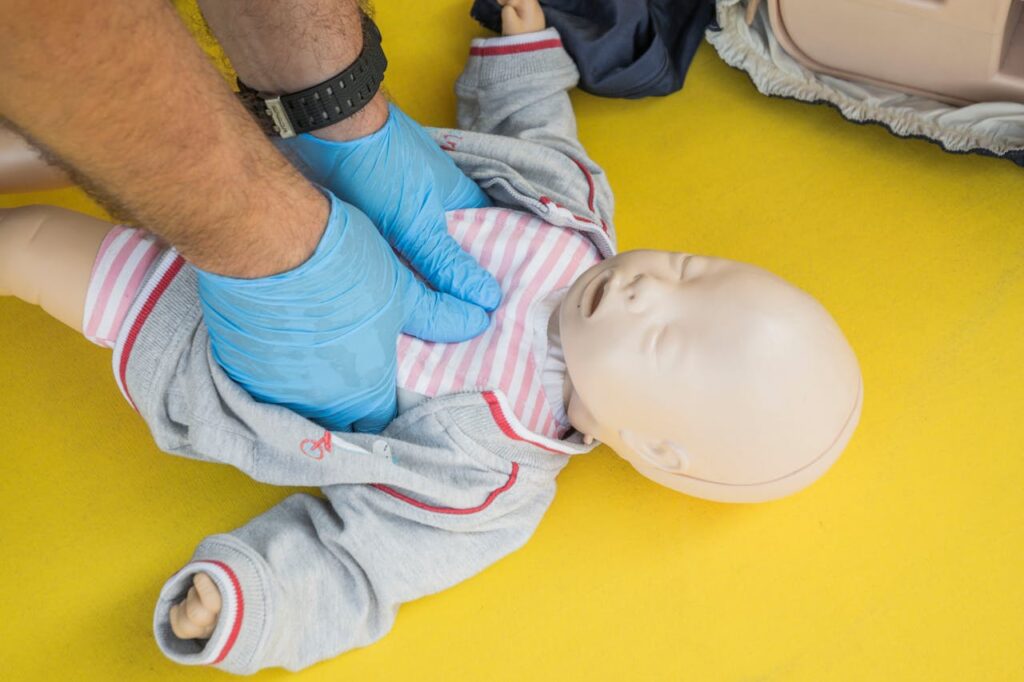
That is why a baby-focused class is better than a quick general CPR talk. You learn the exact steps for a child under one year old, and you can practice on an infant manikin, not just listen.
The biggest benefit is peace of mind. When you know how to respond, you feel more comfortable with common milestones and situations like starting solid foods, taking road trips or flights, spending time at pool days and playdates, and leaving baby with sitters or relatives. You cannot control every situation, but you can learn what to do if something goes wrong.
How to Choose the Right Class Format
When you start comparing infant CPR classes in Arlington, VA, you will see three main formats:
- In-person classes
- Blended classes (online lesson plus in-person practice)
- Fully online classes
For infant CPR, hands-on practice is especially helpful. Feeling how deep to press on the tiny chest and how gently to give breaths is hard to learn from a screen alone. Blended or in-person options give you that practice with an instructor nearby.
Class length matters too. A short 60 to 90 minute overview can give you:
- Basic CPR steps
- A quick choking review
- A fast Q&A at the end
A longer 2 to 3 hour session usually allows:
- Repeated practice with feedback
- Slower review of each step
- Time to cover safety tips and prevention
- Extra Q&A so you can ask “what if” questions
As you compare options, think about your energy level and schedule. Many expecting parents prefer evening or weekend classes and choose a date before the third trimester, while they still feel more comfortable sitting and standing. It can also help to pick a day that does not conflict with prenatal appointments or classes. The “best” format is the one that gives you enough practice and fits your life so you actually attend and stay focused.
Certification, Class Content, and Hands-on Practice
Not all infant CPR classes are the same. One key choice is certification versus non-certification.
American Heart Association certified courses follow a set curriculum and give you an official card or certificate at the end. These can be helpful or required for:
- Nannies and babysitters
- Daycare or preschool staff
- Foster or adoptive parents
- Some workplace or agency policies
Non-certification classes are often called “family” or “awareness” classes. They are designed for parents and caregivers who mainly want to know what to do, not earn a formal card. These can still be very thorough and are often a good fit if you:
- Do not need proof for a job or program
- Want a relaxed setting for family members
- Care most about confidence and clear, simple steps
When choosing, think about your goals. If anyone in your group might use CPR skills for work, a certified class can make sense. If your focus is only home and family, a noncertification class may be enough.
Either way, your class should cover key skills:
- How to recognize an unresponsive infant
- How to check for breathing and call 911
- How to give compressions and rescue breaths
- When and how to use an AED if one is available
- How to keep going until help arrives
Choking response for infants is a must, and the class should be clear about the full sequence. It should teach you how to:
- Tell the difference between noisy, partial choking and silent, complete blockage
- Give firm back slaps to a baby under one
- Add chest thrusts in the correct position
- Support the baby safely the entire time
It is also helpful when the instructor shares prevention tips, like watching for small food pieces at picnics, safe sleep setups, water safety around pools and bathtubs, and simple baby-proofing ideas for your home.
Hands-on practice ties all of this together. Practicing on infant manikins builds “muscle memory,” so your hands remember what to do even if you feel nervous in the moment. Live feedback from an experienced instructor can correct:
- Hand and finger placement
- Compression depth and rhythm
- Head tilt and chin lift
- How strongly and how long to give breaths
When you compare classes, you can ask a few practical questions to make sure you will get enough real practice:
- How much time is spent on practice, not just lecture?
- What is the student-to-instructor ratio?
- Will I share a manikin or have one for myself or my pair?
The more practice you get, the more natural the steps will feel later.
Who Should Attend and How to Vet Local Classes
Infant CPR is not just for the birthing parent. Anyone who will care for your baby should know the basics, including:
- Partners and co-parents
- Grandparents and other relatives
- Babysitters and nannies
- Close friends who will help with care
- Responsible older siblings, if they are old enough
Many families like to turn it into a single learning event before the due date. Everyone learns the same steps and language, so you are all on the same page.
Comfort and access matter too. When you look at classes, it helps to confirm basics like seating and chances to take breaks, whether the space welcomes pregnant participants at all stages, and whether there are options if you have physical limits, like trouble kneeling.
To choose a good infant CPR class in Arlington, VA, use a quick vetting checklist:
- Is the course aligned with American Heart Association guidelines or certification?
- Does the instructor have a healthcare or emergency response background?
- Is the curriculum current and based on widely accepted CPR science?
- Does the class focus specifically on infants, not just adults and older kids?
Beyond curriculum quality, you can also compare practical details such as class size limits so you know you will get attention, whether they provide same-day completion cards or certificates, location/parking/public transit options, and whether they offer private or in-home sessions for your family group.
As an American Heart Association certified provider based near Arlington, CPR, AED, and First Aid Certifications focuses on hands-on infant, child, and adult training with same-day certification options for those who need it. When you choose your class and check off each item on your prenatal CPR checklist, you give your baby, and yourself, a calmer and safer start.
Protect Your Little One With Lifesaving Infant CPR Skills
As CPR, AED, and First Aid Certifications, we provide practical, hands-on training so you can respond confidently in an emergency with your baby or young child. Explore our upcoming infant CPR classes in Arlington, VA and choose the date and time that work best for your family’s schedule. If you have questions about class options, group bookings, or certification details, please contact us so we can help you get started.