Leveraging CPR Classes in Raleigh NC for Workplace Safety Culture
Build a Safer Workplace with CPR Training in Raleigh
Workplace safety is not just about rules and posters on a wall. For Raleigh employers in offices, warehouses, schools, hospitality, and light industrial settings, safety is about people going home at the end of the day. When teams around Raleigh, Cary, Garner, Apex, Wake Forest, Knightdale, and Morrisville know how to respond in a health emergency, safety turns into something real, not just a written policy.
CPR, AED, and First Aid skills help turn safety from a box to check into a shared mindset. When employees know they can step in and help, they pay more attention to risks, they notice where equipment is, and they stay calmer under pressure. Instructor-led American Heart Association, or AHA, courses give that kind of confidence by teaching proven, science-based steps that work in real emergencies.
When businesses choose CPR classes in Raleigh, NC for their teams, they are lowering risk, building trust, and strengthening the whole organization. Trained staff can support each other, support customers, and support visitors, even before EMS arrives. That kind of readiness is a big part of long-term workplace resilience.
Why CPR Skills Matter for Raleigh Workplaces
Sudden cardiac arrest can happen anywhere people gather. It can happen in a quiet office, on a warehouse floor, in a school hallway, or in a hotel lobby. It does not wait for a perfect time, and it does not only affect a certain age group or job type.
What makes the difference is how fast someone nearby can act. When CPR starts quickly and an AED is used within the first minutes, it can give the person a real chance of survival until professional help arrives. AHA guidelines focus on early recognition, strong chest compressions, and rapid AED use so blood flow can keep moving through the body.
For Raleigh-area businesses, this connects directly to their responsibility to help keep the following people safe:
- Employees safe while they work
- Customers safe while they visit or shop
- Students, parents, and staff protected in school and campus settings
- Vendors and guests supported while on the property
When more people on-site are trained, the workplace gains an internal safety network. Trained employees can work alongside on-site medical staff, security, or outside responders, filling the gap in those first, critical minutes. This network supports existing emergency action plans by adding real, practical skills.
Choosing AHA CPR Classes in Raleigh, NC for Your Team
Different teams have different training needs, and that is where AHA course options help. For most workplaces, Heartsaver CPR, AED, and First Aid courses are a strong fit. These classes are designed for the general public, so they work well for:
- Office teams
- Retail and hospitality staff
- School and childcare employees
- Warehouse and light industrial crews
For healthcare-related settings that need more advanced skills, Basic Life Support, or BLS, courses are the standard. These classes are meant for people who work in or around patient care and need to follow AHA BLS guidelines on the job.
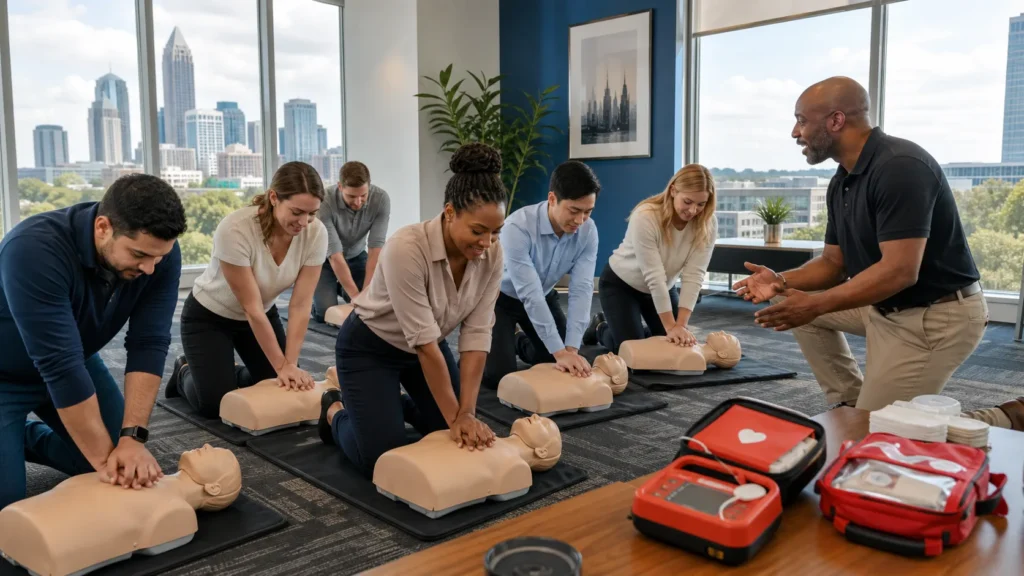
Instructor-led, hands-on training makes a big difference. In a live class, learners can:
- Practice on manikins and AED trainers
- Get real-time feedback from an instructor
- Work through realistic practice scenarios
- Ask questions until the steps feel clear
This approach builds muscle memory and confidence that online self-study alone often does not provide. Flexible scheduling and fast enrollment help Raleigh-area employers fit classes into busy operations. Since certification cards are issued the same day for completed courses, employees can return to work right away with proof of training.
Sessions can also be planned with different departments in mind. For example, front desk and customer-facing staff may focus more on recognizing emergencies quickly, while maintenance or security teams may practice moving equipment, clearing space, or guiding EMS. All of this still follows AHA standards, so the core skills stay consistent across the organization.
Embedding CPR Training Into Workplace Safety Culture
For CPR training to really shape safety culture, it needs to be part of regular workplace life, not a one-time event. A simple way to do this is to build CPR, AED, and First Aid into:
- New hire orientation
- Annual or biannual safety refreshers
- Leadership and supervisor training tracks
- Emergency response drills and tabletop exercises
When people see CPR skills practiced often, they start to view safety as a normal part of the job. Visible signs of readiness, like employees wearing name badges that indicate training, can encourage others to stay current and speak up about safety concerns.
Many workplaces also find it helpful to create internal response teams or safety champions. These are employees from different departments who keep current AHA CPR and AED certifications and are known points of contact during emergencies. They might help with:
- Checking AEDs regularly so they stay ready
- Supporting drills and practice sessions
- Reminding coworkers about renewal dates
- Sharing simple safety reminders during meetings
Clear communication is another key step. Posting easy-to-read signage can show:
- Where AEDs are located on each floor
- Which steps to follow during a medical emergency
- How to alert internal safety teams and external responders
- Who on staff holds current CPR certifications
These simple steps keep response plans from sitting in a binder. Instead, they live on the walls, in team talks, and in day-to-day habits.
Practical Steps to Launch CPR Classes in Raleigh, NC
Getting started with CPR classes in Raleigh, NC does not have to feel complicated. It helps to begin with a basic risk and readiness review. Leaders can ask:
- How many people are on-site daily, and at what times?
- How much public traffic do we have from customers, students, or visitors?
- Where are current AEDs located, and are they easy to reach?
- Which areas or tasks carry higher physical stress or risk?
From there, planning usually follows a simple path:
- Decide which roles must be trained and which would be helpful to train
- Choose between Heartsaver or BLS courses, or a mix of both
- Select training dates far enough in advance for coverage planning
- Decide if classes will take place at the workplace or at a training site
Coordinating across shifts is important so everyone has a fair chance to attend. Some employers stagger sessions over different days or times. Others rotate smaller groups so operations continue smoothly while training is in progress. If your organization has more than one location in the greater Raleigh area, you can map out a schedule site by site while keeping the same course standards.
Keeping a training calendar is one of the most helpful habits. Note each employee’s certification date and the renewal window recommended for their course type. When renewals are planned rather than rushed, skills stay fresh and the safety culture remains strong without last-minute stress or gaps in coverage.
By turning CPR, AED, and First Aid training into an ongoing rhythm, workplaces in Raleigh and nearby communities create teams that are not only skilled, but also confident and ready to act when it matters most.
Gain Lifesaving Skills With Flexible CPR Training Today
If you are ready to feel confident in an emergency, explore our available CPR classes in Raleigh, NC and choose the course that fits your schedule. At CPR, AED, and First Aid Certifications, we provide hands-on training that helps you respond quickly when every second matters. If you have questions about class options or group training, contact us so we can help you get enrolled.