Matching CPR Classes in Raleigh, NC to Your Job Role and Risks
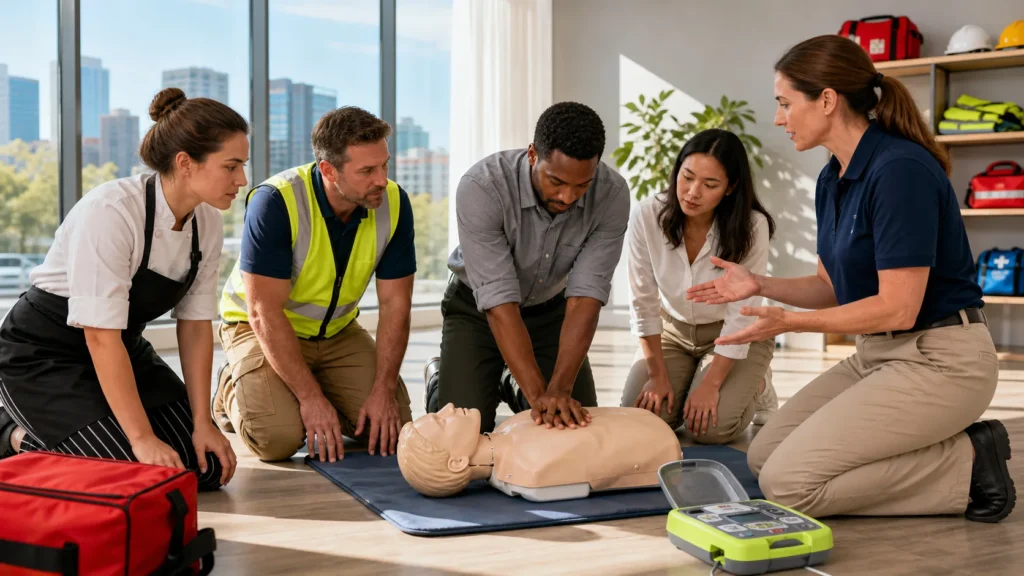
Choose CPR Training That Matches Real Risks
Not all CPR classes in Raleigh, NC, are built for the same situations. The right course for you depends on what you do at work, who you are responsible for, and what kinds of emergencies you are most likely to see. A daycare worker, a nurse, and a warehouse supervisor all need CPR skills, but they do not need the exact same course.
Our team provides instructor-led, American Heart Association aligned CPR, AED, First Aid, and BLS training with same-day certification cards. We focus on hands-on practice so you leave class ready to act, not just with a card in your wallet. In this guide, we will walk through how to match your role and risk level to the right class, so you stay compliant and feel ready for real life.
Understanding CPR Course Levels and What They Cover
Before you choose a class, it helps to know the main levels of training you will see in CPR classes in Raleigh, NC. In general, you will find three common options:
- Community CPR and AED
- Combined CPR, AED, and First Aid
- Basic Life Support, also called BLS, for healthcare professionals
Community CPR and AED is usually for people who are not in medical roles but still want to be prepared. This includes parents, lifeguards, office staff, and anyone who wants basic life-saving skills. In this course, you learn how to check for response and breathing, call for help and start chest compressions, give rescue breaths if required by the course, and use an AED safely and quickly.
Combined CPR, AED, and First Aid adds care for injuries and sudden illness on top of CPR skills. Along with CPR and AED, you typically cover bleeding and wound care, suspected broken bones and sprains, burns, shock, and sudden illness, as well as the basics of how to stay safe while giving care.
AHA BLS is a higher level of CPR training designed for healthcare teams. It keeps the focus on high-quality CPR, fast use of an AED, and working as part of a team in medical settings. Skills usually include:
- Adult, child, and infant CPR
- One-rescuer and two-rescuer CPR
- Bag-mask ventilation
- Team roles and clear communication during a code
Across all levels, instructor-led, hands-on practice makes a big difference. Practicing on manikins and training AED units lets you:
- Feel how deep compressions should be
- Learn the right hand placement and body position
- Get real-time coaching and correction
- Walk through realistic scenarios step by step
If you ever train in another city, such as at our AHA classes in Uniondale or Troy, you will see the same focus on skills that match real life.
Matching CPR Classes in Raleigh, NC to Healthcare Roles
For healthcare workers, AHA BLS is often the standard your employer will ask for. Hospitals, clinics, surgery centers, long-term care facilities, and many dental practices want staff trained in BLS because medical emergencies are part of daily risk. If you are an RN, LPN, physician, paramedic, medical assistant, or a student starting clinicals, BLS is usually the right choice.
In healthcare settings, you may face cardiac arrest in a patient bed or waiting room, breathing problems after a procedure, sedation or medication reactions, and codes that involve multiple providers at once. Because of this, BLS training focuses heavily on coordinating as a team during CPR, switching compressors without long pauses, using a bag-mask device with oxygen, and working in both in-hospital and prehospital scenarios.
To choose the right BLS class, we suggest you:
- Confirm with your employer or school which exact certification they require
- Check if you need an initial BLS course or a renewal, based on your current card
- Plan dates that fit your shifts and any upcoming credential deadlines
If you travel or relocate, you can also keep your BLS status current by joining AHA classes in places like Santa Barbara, as long as the course meets AHA standards.
CPR and First Aid Needs for Schools, Fitness, and Childcare
Teachers, school staff, coaches, childcare providers, camp counselors, and fitness professionals face a different mix of risks. Your students, players, or clients may be otherwise healthy, but emergencies can still happen without warning.
For these roles, CPR and AED training that includes both child and adult skills is usually a good match, and childcare staff and early education programs often need infant CPR too. The most helpful courses for these jobs are usually:
- CPR and AED with adult, child, and infant skills
- CPR, AED, and First Aid together in one class
Strong first aid skills are just as important as CPR in these settings. You may need to manage:
- Cuts, scrapes, and nosebleeds
- Strains, sprains, and possible fractures
- Asthma attacks during play or exercise
- Allergic reactions from food or insect stings
- Sudden illness, headaches, or fainting
When schools, gyms, or childcare centers set up group CPR classes in Raleigh, NC, they can:
- Make sure staff follow the same emergency steps
- Support licensing, policy, or insurance requirements
- Help parents and clients feel safer about the care provided
Workplace, Industrial, and Community CPR Requirements
Offices, construction sites, warehouses, restaurants, and public venues often name specific staff as safety or emergency responders. These people are not medical professionals, but they may be first on scene when something goes wrong.
For most workplaces, combined CPR, AED, and First Aid is the most useful option, because it covers a wide range of incidents. Your choice should reflect your job risks, and different environments tend to prioritize different skills:
- Offices and small retail: adult CPR and AED, with first aid for slips, falls, and sudden illness
- Construction sites and warehouses: adult CPR and AED, plus strong first aid skills for injuries linked to tools or equipment
- Manufacturing and industrial settings: CPR, AED, and detailed first aid, since help may take longer to reach certain areas
- Restaurants and food service: choking response, allergic reactions, burns, cuts, plus adult CPR and AED
Some sites may choose adult-only CPR if children are rarely present. Others, such as large public venues or community centers, may want adult, child, and infant CPR so staff are ready for any visitor.
Safety managers and business owners can work with training providers to:
- Pick the right course level for their industry
- Decide which staff members should be trained as primary responders
- Fold CPR and First Aid training into larger safety and emergency plans
Turning CPR Training Into Real-World Readiness
CPR training should be more than checking a box for HR or a license. The best match is a course that looks and feels like your real workday, with practice that fits the people you serve and the emergencies you may actually see.
To turn CPR classes in Raleigh, NC into real readiness, it helps to:
- Pick the level that matches your actual risk and duties
- Ask questions in class about scenarios you truly worry about
- Practice skills regularly so they stay fresh after the course
Certification cards expire, so it is important to keep track of dates and plan renewals ahead of time. Refresher training keeps your skills sharp and updates you on the latest American Heart Association guidelines. When you choose a course that fits your role and stay current over time, you are in a stronger position to respond when every second matters.
Get Certified To Respond In An Emergency
When a medical emergency happens, being trained can make all the difference in how quickly and confidently you respond. At CPR, AED, and First Aid Certifications, we offer convenient CPR classes in Raleigh, NC that fit your schedule and experience level. Register for a course today so you are prepared to protect your coworkers, family, and community. If you have questions about which class is right for you, please contact us.