Recognizing High-Impact Community CPR Training in Santa Barbara
How Community CPR Skills Transform Emergency Outcomes
When a person collapses from cardiac arrest, every minute before medical help arrives matters. The person on the ground is not thinking about training, rules, or checklists. They simply need someone nearby who knows how to act fast, call 911, and start good, strong chest compressions. That early start can give their heart and brain a fighting chance until EMS arrives.
The American Heart Association (AHA) explains that early, high-quality CPR can make survival from cardiac arrest much more likely. Quick action keeps blood moving to the brain and organs. When bystanders wait, hoping someone else will step in, the chances of recovery drop with each passing minute.
This is why community CPR training in Santa Barbara is so important. When people in workplaces, schools, homes, and public spaces share the same lifesaving skills, they form an invisible safety net across the city. The more people who are trained, the more likely it is that someone nearby will be ready to help in those first stressful moments before EMS takes over.
What High-Impact Community CPR Training Looks Like
Not all classes feel the same. High-impact training is about more than watching a video and signing a form. It is about learning skills in a way that sticks when you are under pressure.
Strong community CPR training usually includes:
- AHA-aligned curriculum that follows current guidelines
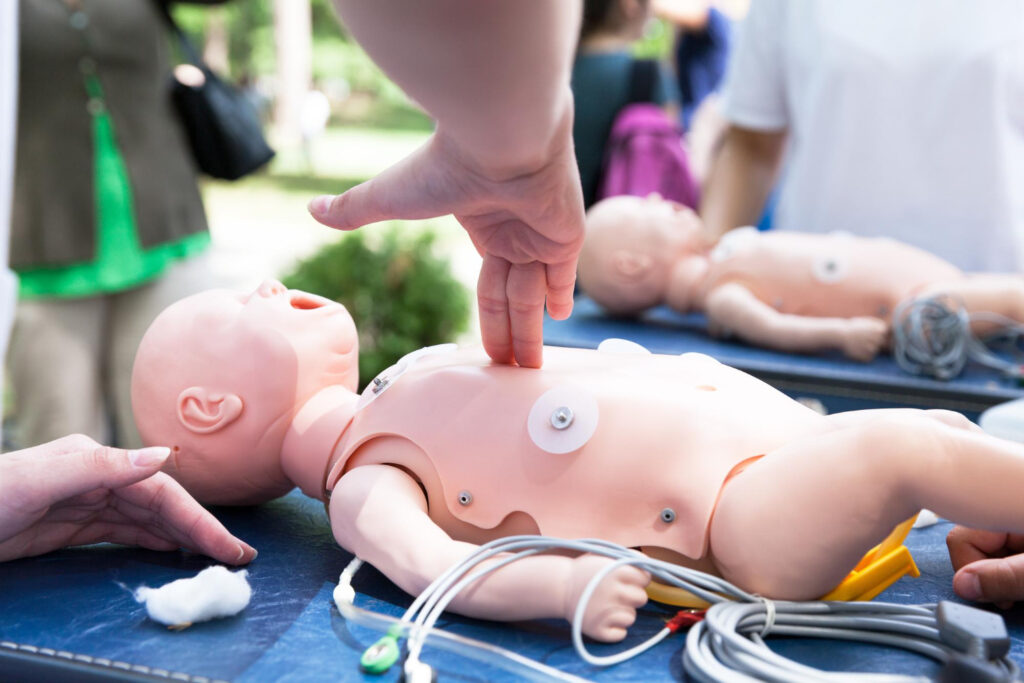
- Hands-on practice on quality manikins
- Realistic practice scenarios for both adults and children
- Immediate feedback from instructors so you can correct your technique
In a high-impact class, lecture and demonstration are just the starting point. Good courses use a mix of short teaching segments and skills stations, where learners rotate through different hands-on activities. Participants get to:
- Practice chest compressions at the correct depth and rate
- Work with training AEDs, so they know what to expect from the prompts
- Rehearse how to call 911 and work with others as a team
Small class sizes and strong instructor-to-student ratios make a big difference. When an instructor can watch your hand position, body posture, and compression speed up close, they can point out common errors right away. That coaching builds muscle memory, so your body remembers what to do when your mind is under stress. In our AHA courses at the Santa Barbara training site, this kind of focused practice is a central part of the experience.
How Santa Barbara Benefits From Widespread CPR Readiness
Community CPR training in Santa Barbara is about more than checking a box for a job requirement. It changes what happens in living rooms, gyms, schools, and office hallways when someone collapses.
When more people share the same AHA-based skills, several things happen:
- Bystanders are more likely to start CPR instead of waiting for EMS
- Families feel more ready to act if a loved one needs help at home
- Staff in offices, schools, and fitness centers can respond together as a team
- AEDs in public places are more likely to be used quickly and correctly
Cardiac arrest can happen in any setting, not just in hospitals. When people have trained under the same AHA standards, the time between a collapse, calling 911, starting CPR, and using an AED often shrinks. That smoother response can support better outcomes for the person in crisis.
Local organizations also play a big role. Healthcare facilities, schools, fitness centers, and many other workplaces that certify their staff help support a safer community. Each group that trains its members adds another layer of readiness across the city. Our other locations, such as Uniondale and Troy, follow the same approach, building community readiness in their own regions as well.
Choosing the Right CPR, AED, and First Aid Course
With different class options out there, it helps to know what to look for when you choose training for yourself or your team. A few key points to consider include:
- Alignment with official AHA courses and guidelines
- In-person, hands-on skills sessions, not just online videos
- Current training materials that match up-to-date best practices
- Certification cards that employers, schools, and industry groups recognize
Different people need different types of CPR training. Healthcare professionals often need AHA Basic Life Support (BLS) courses that focus on clinical settings, team-based care, and advanced equipment. Workplaces and community members usually benefit from AHA Heartsaver CPR AED and First Aid courses, which focus on everyday environments and simple, clear steps.
Same-day certification cards can matter for many people. New hires often have tight onboarding timelines. Students may need proof of training before clinical rotations or school programs. When a class includes same-day cards, learners can meet their requirements without waiting days or weeks for documentation.
Building CPR Programs for Workplaces and Groups
For employers and organizations, one class is a good start, but an ongoing plan is even better. Building a CPR program helps keep skills fresh and aligned with safety expectations.
A simple approach to planning might include:
- Assessing which job roles should be trained and at what level
- Deciding how often to renew CPR, AED, and First Aid certifications
- Matching class types to OSHA or industry expectations using AHA courses
- Scheduling group sessions on-site to reach as many people as possible
On-site community CPR training in Santa Barbara can be tailored to the needs of each group. A childcare center, for example, may focus more on pediatric emergencies. An industrial workplace might pay more attention to adult cardiac arrest and trauma-related first aid.
Recurring sessions help keep skills from fading. When staff know that CPR, AED use, and first aid will be reviewed on a regular schedule, they tend to stay more confident and alert. Linking training to existing emergency action plans also helps. People see how their CPR skills fit into larger steps like evacuation routes, designated responders, and communication with local EMS.
Take the Next Step Toward a CPR-Ready Santa Barbara
Every person who learns CPR adds strength to the response chain in Santa Barbara. When more people can recognize cardiac arrest, start compressions, and use an AED, the entire community becomes better prepared for sudden emergencies.
Families, workplaces, schools, and volunteer groups can all look at where CPR skills might be missing and make a plan to fill those gaps. A shared foundation in AHA-based CPR, AED, and First Aid training builds confidence, creates teamwork, and supports better outcomes when seconds count.
Protect Your Community With Lifesaving CPR Skills
At CPR, AED, and First Aid Certifications, we provide practical, hands-on courses that give you the confidence to act in an emergency. Explore our community CPR training in Santa Barbara options to find a class that fits your schedule and needs. If you have questions about group sessions, certifications, or custom training, please contact us so we can help you get started.