Verifying CPR Certification in Raleigh NC Before You Enroll
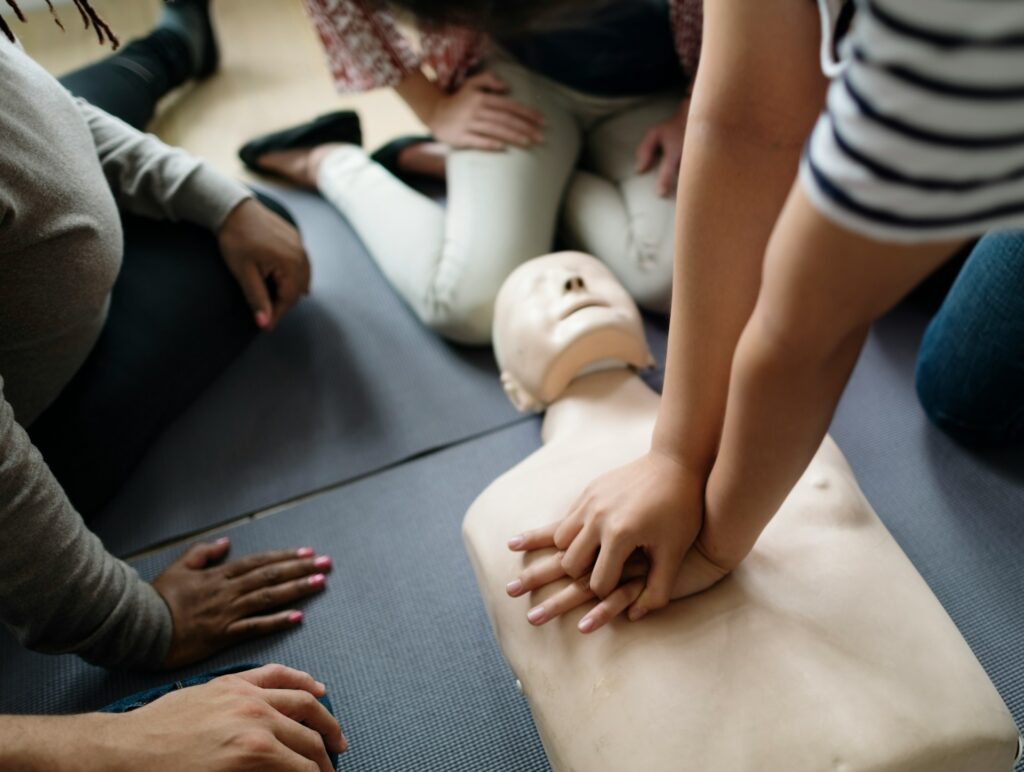
Protect Your Time and Money with Verified CPR Training
Signing up for CPR training should move you forward, not hold you back. When you choose the wrong CPR certification in Raleigh, NC, you can end up with a card your employer will not accept, skills that feel shaky in a real emergency, and hours of your life that you cannot get back.
The problem usually starts with classes that are not aligned with the American Heart Association (AHA), are completely online with no hands-on practice, or use old guidelines. That can mean denied credentials, delayed hiring, or being turned away from clinical rotations or volunteer roles.
In this guide, we will walk through how to confirm that a class meets AHA standards and matches what Raleigh employers are asking for. We will share practical steps to check the course type, instructor, format, and the certification card you will receive so you can enroll with confidence.
What a Valid CPR Certification Really Means
A valid CPR certification in Raleigh, NC, is more than a piece of plastic or an email attachment. It is proof that you learned current AHA CPR skills and showed them in front of an approved instructor.
For most people, that means one of these AHA course types:
- Heartsaver CPR AED, often for workplace teams and community members
- Heartsaver First Aid CPR AED, which adds basic first aid skills
- BLS Provider (Basic Life Support), geared toward healthcare professionals
A valid class should clearly cover:
- Adult CPR, AED use, and choking response
- Child CPR and choking response
- Infant CPR and choking response, when included in the course type
There is also an important difference between CPR for healthcare professionals and CPR for the general public. Healthcare workers usually need AHA BLS Provider because it focuses on team-based resuscitation, bag-mask use, and working in clinical settings. Teachers, coaches, childcare workers, and most workplace staff are usually fine with AHA Heartsaver CPR AED or Heartsaver First Aid CPR AED.
Most AHA cards are current for about two years, and they require an in-person skills check. That in-person practice protects patients, coworkers, and employers by making sure you can actually perform compressions, breaths, and AED use under supervision.
How to Confirm AHA Alignment Before You Enroll
Before you commit to any CPR certification in Raleigh, NC, look closely at how the class is described. You want to see the AHA name clearly spelled out.
- Exact AHA course titles, like “AHA BLS Provider” or “AHA Heartsaver First Aid CPR AED”
- Mention of AHA student manuals, eLearning modules, or AHA guidelines
- A connection to an AHA Training Center or Training Site
You can double-check in a few ways:
- Ask the provider: “What is the exact AHA course name on the card?”
- Request the name of the AHA Training Center they use
- Use the AHA training center locator and verify that Training Center is recognized
There are also red flags that should make you pause:
- Vague names like “professional CPR course” with no AHA title
- Promises of “instant 100% online CPR card, no skills check required”
- No mention of hands-on practice or in-person skills testing
- Cards that do not show AHA branding or an AHA course name
If a provider offers locations in other cities, such as Uniondale or Troy, that can be another chance to ask how all of their sites are linked to an AHA Training Center.
Checking Employer and Licensing Acceptance in Raleigh
The best way to avoid problems is to confirm that your future card will be accepted before you ever step into class. Rules can be different between a large hospital, a dental office, and a private school.
Start by asking:
- HR or education staff at hospitals and clinics
- Office managers for dental and medical practices
- Program directors for home care agencies and fitness centers
- Directors or licensing contacts for childcare centers and schools
Key questions to ask:
- “Do you require AHA BLS Provider, or is Heartsaver CPR AED accepted?”
- “Do you accept AHA blended learning with an in-person skills check?”
- “Will you accept an AHA eCard?”
For licensed professionals, such as nurses or EMS, it also helps to check with the state licensing board or your training program. Keep any email replies where they confirm what they accept. That written proof can save you from last-minute surprises when you start a new job or rotation.
Course Format, Instructors, and Certification Cards
AHA CPR classes can be offered in different formats, but not all of them lead to a valid AHA card.
Common options:
- Fully in-person classes, where lecture and skills practice happen in the classroom
- Blended learning, where you complete an AHA online module, then attend an in-person skills session
Only classes that include an in-person skills check with an AHA instructor lead to a valid card. A purely online course labeled as “CPR certificate” without live practice will not meet AHA standards.
When you look at a training site in Raleigh, ask about:
- Instructor background (healthcare or emergency response experience)
- Current AHA instructor certification
- Quality manikins and AED trainers for realistic practice
- Reasonable student-to-instructor ratios so you get feedback
A legitimate AHA card or eCard should list:
- The AHA logo
- Exact course name, such as “BLS Provider” or “Heartsaver First Aid CPR AED”
- Student name
- Issue and expiration dates
- Training Center and instructor information
You can also ask if they issue cards on the same day as class. Many AHA-based providers, including multi-location groups that also teach in places like Santa Barbara, use same-day eCards so you can show proof right away.
Matching CPR Options and Answering Common Questions
Before you enroll, match the course to your role and your calendar.
For most people:
- Healthcare staff or students usually need AHA BLS Provider
- Teachers, coaches, childcare staff, and workplace teams often need Heartsaver First Aid CPR AED
- Parents and community members can choose Heartsaver CPR AED or Heartsaver First Aid CPR AED
Also think about:
- Class length and how it fits your work or school schedule
- Day, evening, or weekend options
- How close the training site is to where you live or work
- On-site group training if your whole team needs certification
Ask about refund or reschedule rules, especially if your schedule changes often, and check for any prerequisites, like completing an online AHA module before class.
Here are quick answers to common questions we hear:
FAQ 1: How can I quickly confirm that a CPR class in Raleigh is AHA-approved and meets my employer’s rules?
Ask the provider for the exact AHA course name on the card and the name of their AHA Training Center. Then confirm with your employer or school that this specific AHA course is accepted.
FAQ 2: Are fully online CPR courses acceptable for AHA certification or healthcare jobs?
No, AHA certification requires an in-person skills check. You can complete online knowledge modules, but you must still attend a live skills session with an AHA instructor to receive a valid card.
FAQ 3: How far in advance should I renew my AHA CPR or BLS card in Raleigh, NC?
AHA cards are generally current for about two years. It is smart to renew at least 30 to 60 days before your expiration date so work shifts, clinicals, or school deadlines are not interrupted.
FAQ 4: What should I bring to my AHA CPR, AED, and First Aid class?
Bring a photo ID, any required pre-course certificates for blended learning, comfortable clothing for practicing on the floor, and any instructions your employer or school has given you.
By taking these steps to confirm AHA alignment, employer and licensing acceptance, course format, instructor quality, and card details, you can enroll in CPR, AED, and First Aid training in Raleigh that actually supports your goals and prepares you to act when it matters most.
Protect Your Community With Lifesaving CPR Skills
Taking action today means you will be ready when every second counts. Explore our upcoming classes and secure your CPR certification in Raleigh, NC so you can respond confidently in an emergency. At CPR, AED, and First Aid Certifications, we provide hands-on, practical training that fits your schedule. If you have questions about which course is right for you or need help registering, please contact us.