Designing Community CPR Training in Santa Barbara for Real AHA Emergencies
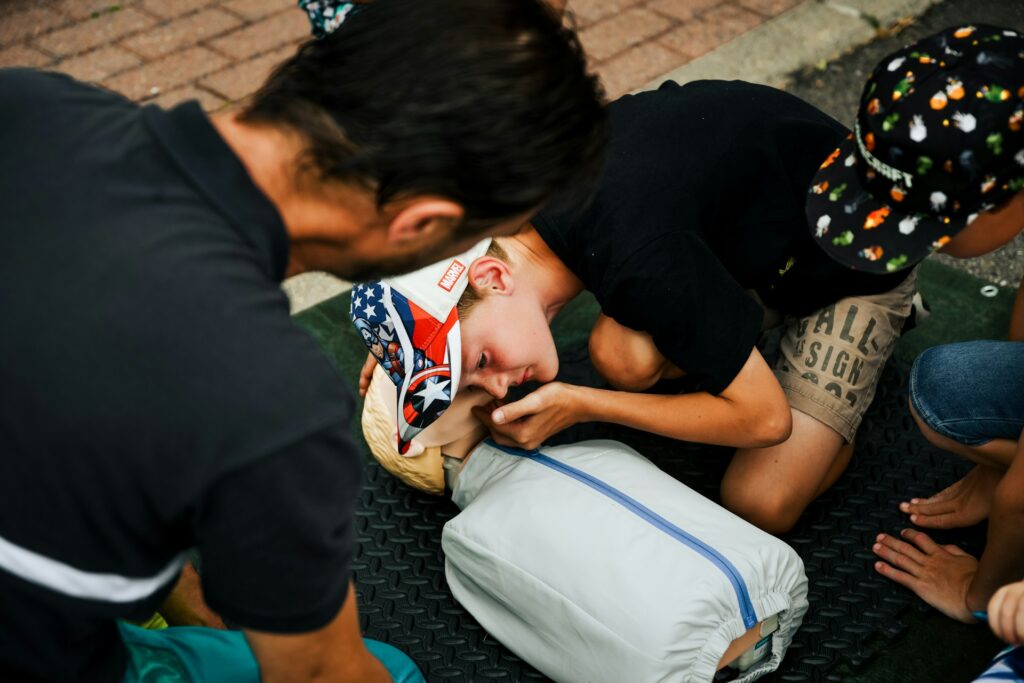
Building a Stronger Santa Barbara Through CPR Skills
A sudden collapse at a workplace, gym, or community event can change a normal day in seconds. In that moment, the person standing closest often matters just as much as the 911 dispatcher or the EMS crew on the way. When someone nearby starts CPR right away, the chances for a better outcome can rise a lot, according to the American Heart Association (AHA).
Community CPR training in Santa Barbara helps turn neighbors, coworkers, teachers, and parents into confident first responders during those first urgent minutes. Instead of freezing or guessing, people know what to do, who to call, and how to work together until help arrives. Our goal is to make that kind of calm, skilled response feel normal across our city.
At CPR, AED, and First Aid Certifications, we provide American Heart Association CPR, AED, First Aid, and BLS training with same-day certification and in-person skills checks. We build our local classes around real AHA emergency patterns and the real places where Santa Barbara residents live, work, and play.
Using AHA Case Data to Shape Local Training
AHA research on out-of-hospital cardiac arrest gives us a clear picture of what tends to help. The core ideas from that research shape every class we teach in Santa Barbara:
- Strong, steady chest compressions
- Early use of an AED
- Very few pauses once CPR has started
We design our practice to match the places where emergencies often happen. For community CPR training in Santa Barbara, that can mean scenarios in:
- Offices, hotels, and other workplaces
- Schools and youth sports fields
- Fitness centers and yoga studios
- Restaurants, shopping areas, and public events
- Senior living and retirement communities
Each setting changes the details of the response. For example, a busy restaurant has noise and crowding, while a small office may have limited staff. AHA guidelines help us decide what to focus on in each situation. We spend time on:
- Spotting cardiac arrest quickly, not assuming a person is just tired or has fainted
- Activating EMS in a clear way, including sending someone to meet first responders
- Coordinating the bystander team so compressions, AED use, and communication happen smoothly
By tying AHA evidence to real Santa Barbara locations, we help students see how CPR skills fit right into their daily routines.
Designing Scenario-Based Classes for Santa Barbara Needs
People learn best when they can picture where they will use a skill. That is why we build our classes around realistic local scenarios instead of only doing drills on a classroom floor.
Some common practice setups include:
- A sudden collapse in the lobby of a busy office building
- A cardiac arrest at a beachfront hotel or pool area
- A medical emergency during a school sports game
- Someone becoming unresponsive at a crowded community event
In each scenario, we walk through every step of the AHA chain of survival:
- Early recognition of cardiac arrest
- Calling 911 and putting the phone on speaker if possible
- Immediate, high-quality CPR
- Rapid use of the nearest AED
- Continuous care until EMS or advanced providers take over
Hands-on skills stations are built right into these stories. Students rotate through:
- Chest compressions practice on adult, child, and infant manikins
- Rescue breaths and using a barrier device
- AED pad placement and following AED voice prompts
- Placing a breathing, unresponsive person in the recovery position
We add realistic time pressure, background noise, and bystander roles so students can experience what it feels like to act fast and stay focused. Our center in Santa Barbara is part of a larger network that also runs AHA-based classes in other communities such as Uniondale and Troy, and we bring that broad teaching experience into every local scenario we design.
Tailoring CPR and BLS Courses for Workplaces and Clinics
Not every group needs the same level of training. Community CPR and AED courses work well for most workplaces and public settings, while healthcare teams usually need Basic Life Support, or BLS, from the AHA.
Here is a simple way to think about the difference:
- Community CPR/AED: For teachers, office staff, fitness coaches, childcare providers, and general employees
- BLS: For clinic staff, dental teams, outpatient providers, rehab staff, and others who give medical care as part of their job
For Santa Barbara employers, we line up AHA course content with each organization’s emergency plan. During training, teams can:
- Assign roles like compressor, AED runner, 911 caller, and crowd manager
- Map out who grabs which equipment and where it is stored
- Practice moving furniture or clearing space around a patient
- Walk through what to tell EMS when they arrive
Because we offer same-day certification with an in-person skills evaluation, local businesses and clinics can keep staff current without long delays. Flexible scheduling helps workplaces update more people at once and stay aligned with AHA-based expectations. Our Santa Barbara CPR and BLS courses are built to fit these on-the-job needs.
Making CPR Skills Stick with Ongoing AHA Refreshers
AHA research shows that CPR skills and confidence tend to fade if people do not practice. Even those who did very well in class can feel unsure months later if they have not reviewed the steps.
Santa Barbara organizations can keep skills fresh with simple habits:
- Short quarterly drills where staff take turns doing 1 or 2 minutes of compressions
- AED walk-throughs to review how to open the device and place the pads
- Brief safety huddles that cover signs of cardiac arrest and how to clear a scene
- Posting clear CPR and AED reminders in break rooms and common areas
We can help set up recurring AHA-based courses so new hires, volunteers, and long-time staff all stay on the same page. Regular refreshers mean people know where the nearest AED is, how to work as a team, and how to stay calm when it counts most.
Turning Our Community Into a Network of Lifesavers
When more people in Santa Barbara know CPR, every office, gym, school, and public space becomes safer. A coordinated plan for community CPR training in Santa Barbara, built on AHA guidelines, gives our city a shared standard for what a strong response should look like.
One helpful first step is to notice where cardiac arrest is most likely in your own world. That might be:
- A workplace with many employees and visitors
- A school with crowded events and active sports
- A fitness center where people push their limits
- A senior residence with older adults and visitors
From there, groups can decide which staff and regulars should hold current AHA-aligned CPR, AED, and First Aid certifications, and how often they will retrain. Every person who learns to recognize cardiac arrest, start compressions, and use an AED adds one more link in our community’s chain of survival and increases the chance that a future emergency will have a better ending.
Protect Your Santa Barbara Community With Lifesaving Skills
Now is the time to equip yourself, your family, and your coworkers with skills that can save lives. Explore our community CPR training in Santa Barbara options to find the class that fits your schedule and comfort level. At CPR, AED, and First Aid Certifications, we offer hands-on, guideline-based training so you feel confident stepping in during an emergency. If you have questions about group classes or custom training, please contact us and we will help you get started.