Decoding CPR Certification for Teachers in Raleigh Schools
Why CPR Skills Matter for Raleigh Educators
CPR skills give teachers a simple, clear plan when the worst happens on campus. When a student, staff member, or visitor collapses, the person closest to them is often a teacher, coach, or assistant. Quick CPR from that nearby adult can keep blood and oxygen moving until EMS takes over, which can make a real difference in how that emergency ends.
Many school medical emergencies start in everyday places: at a desk, in the gym, during lunch, or on the playground. The school nurse might be across campus, and EMS needs time to arrive. That gap is where trained educators matter most. CPR certification for teachers in Raleigh is one key part of a bigger safety picture, working side by side with school nurses, emergency action plans, campus drills, and fast 911 activation.
Understanding CPR Certification Requirements in Raleigh Schools
Most Raleigh-area schools expect at least some staff to be trained in CPR, AED use, and basic First Aid. Exact rules can vary by district, charter network, or private school, but the goal is similar: there should always be trained adults on-site who know what to do when someone is not breathing or has no pulse.
School leaders often build their rules around nationally recognized standards like those from the American Heart Association. That way, CPR skills look the same from one campus to the next, and staff who move between schools already know what is expected of them. This can help simplify onboarding and keep safety plans clear.
Typical expectations include things like:
- Having a set number of CPR-trained staff per campus or per grade level
- Requiring coaches, PE teachers, and some activity leaders to hold current cards
- Including CPR and AED training in new hire orientation or early in the school year
Because certification usually lasts about two years, many administrators set up training cycles so nothing slips through the cracks. New hires might complete CPR during their first semester, while returning staff renew on a staggered schedule. This planning helps avoid lapsed cards in the middle of the school year, when field trips, sports seasons, and after-school activities are in full swing. School systems in other regions use a similar approach, such as those served by our AHA-aligned locations in places like Troy.
What AHA-Style CPR Training for Teachers Includes
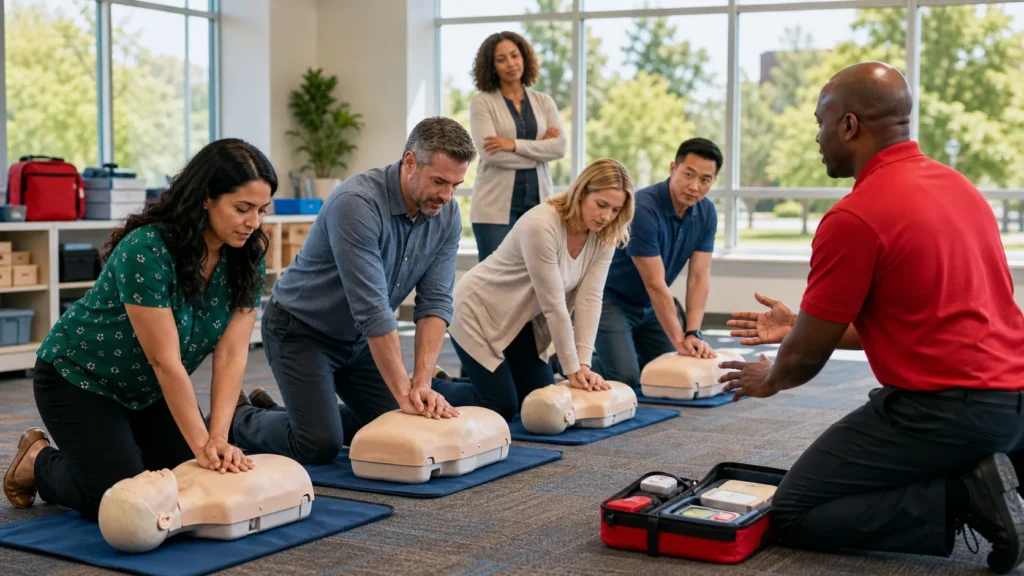
American Heart Association-aligned CPR courses for educators are designed to be clear, hands-on, and focused on the real situations teachers might meet. For most school staff, a Heartsaver-style course fits well. It usually covers:
- Adult CPR, for coworkers, parents, or visitors
- Child CPR, for older students
- Often infant CPR, helpful for early childhood or on-site daycare settings
In class, we spend time on recognizing when someone may be in cardiac arrest, checking for responsiveness and normal breathing, and starting high-quality chest compressions. We also cover rescue breaths, so teachers know when and how to use them if the course type calls for that skill.
AED training is a key part of this process. Educators learn how to:
- Locate the nearest AED on campus
- Send someone to bring it while CPR continues
- Turn on the device, place the pads correctly, and follow its prompts
This practice helps remove the fear that some people feel around using an AED. The device gives step-by-step instructions, and with a little training, teachers learn how to stay calm and let it guide them.
Many schools also add First Aid to their CPR and AED training. These lessons can cover problems that often happen at school, such as:
- Choking in the cafeteria
- Bleeding from cuts or sports injuries
- Asthma issues or allergic reactions
- Fainting or sudden illness in class
The goal is not to turn teachers into medical professionals. It is to give them simple, safe steps so they can keep a situation under control until EMS or the nurse arrives.
Choosing the Right CPR Certification for Teachers in Raleigh
Not every staff member needs the same type of course. When we talk about CPR certification for teachers in Raleigh, we look at job roles, daily duties, and school policies to match the right level of training.
For many classroom teachers, office staff, and support staff, a Heartsaver CPR AED or Heartsaver CPR AED with First Aid course is usually appropriate. These courses focus on lay rescuer skills that fit well with the emergencies most likely in a school setting.
Basic Life Support, or BLS, is usually aimed at people who work more directly with medical tasks. In a school, that can include:
- Nurses and health room staff
- Some athletic trainers or sports medicine staff
- Certain specialists who support students with complex medical needs
Working with a local provider that aligns with American Heart Association guidelines and understands school life can make this process smoother. Providers who know bell schedules, testing days, and in-service days can help schools choose options like:
- On-site group classes during teacher workdays
- Smaller sessions for new hires or staff who missed the main training
- Blended learning, where staff complete an online portion before a shorter, hands-on skills check
This kind of flexible setup is used in many communities we serve, such as our American Heart Association classes in Uniondale, and it adapts well to Raleigh campuses too.
Making CPR Training Fit the School Calendar
One of the hardest parts for administrators is fitting training into an already full school calendar. With the right plan, CPR certification for teachers in Raleigh can happen without taking too much time away from students.
Helpful strategies include:
- Using teacher workdays or professional development days for large group classes
- Splitting big staffs into two or three groups so some teachers stay with students while others train
- Offering after-school options for staff who prefer a later session
Another helpful step is to build a renewal cycle that runs year-round. Instead of trying to renew everyone in the same month, schools can spread classes across the year by grade level, department, or campus area. That way, there are always certified staff on-site, and HR is not pushed into last-minute scrambling before cards expire.
Good record-keeping also matters. Many schools like having:
- Clear rosters of who is certified in what
- Same-day cards for fast documentation
- Reminder systems so staff know when they are due to renew
These habits can make safety audits and district checks much less stressful. They also help confirm that every hallway, classroom cluster, and activity area has enough trained adults nearby. We see this kind of planning in other areas we serve, like our AHA courses in Santa Barbara, and the same ideas work well for Raleigh schools.
Taking the Next Step Toward a Safer Raleigh Campus
A smart next step for school leaders and teacher teams is to take a clear look at their current CPR, AED, and First Aid coverage. It helps to map out who is certified by building, by floor, and by role. Some campuses find they have strong coverage in the main office and gym, but fewer trained staff in portable classrooms, specialty rooms, or certain after-school programs.
From there, schools can decide who needs training next, which type of course fits each group, and when sessions can fit into the calendar. By keeping CPR training active, planned, and tied to American Heart Association standards, Raleigh educators can feel more confident that when something sudden and serious happens, there will be calm, trained adults ready to act in those first important minutes.
Equip Your Classroom With Lifesaving Skills Today
If you are ready to make your school a safer place, let CPR, AED, and First Aid Certifications help you take the next step. Explore CPR certification for teachers in Raleigh to find a course that fits your schedule and training needs. Our team is here to answer your questions and support your staff, so feel free to contact us to get your training on the calendar.