Common CPR Training Mistakes Cincinnati Employers Overlook
CPR Readiness Starts Before an Emergency
Cardiac arrest at work does not give anyone extra time to get ready. In those first minutes, your team either knows what to do or they do not. The outcome depends on choices your company made long before that employee collapsed on the floor.
Many Cincinnati employers feel comfortable once they can say, “We offer CPR training, so we are covered.” But gaps in how that training is planned, delivered, and refreshed can leave staff unsure, slow to act, or afraid to touch the AED. The American Heart Association (AHA) sets widely respected guidelines for high-quality CPR and AED skills, and those guidelines point to issues, that often get missed in workplace programs.
In this article, we are sharing common CPR training mistakes we see employers make, plus practical ways to fix them so your team can respond with confidence when seconds matter.
Treating CPR as a One-Time Checkbox
One of the biggest problems is treating CPR training like a one-and-done task. Many companies run a class during onboarding, hand out cards, and then forget about it until the expiration date sneaks up.
The problem is skill decay. Without practice, people quickly lose the details that matter, like how hard and how fast to push, or when to switch rescuers. When a real emergency hits, they may freeze, doubt their memory, or stop after a few compressions because they are not sure they are doing it correctly.
To avoid this, think of CPR readiness as an ongoing system, not a single event.
Helpful steps include:
- Plan AHA-compliant recertification before cards expire so there is no gap in coverage.
- Mix in short practice drills between full courses so muscle memory stays fresh.
- Give high-risk roles and public-facing teams extra chances for hands-on refreshers.
In some locations, like our AHA classes in places such as Troy, we see how powerful these regular touchpoints can be for confidence and performance.
Relying Only on Online Videos Instead of Hands-On Practice
Another common shortcut is swapping live classes for online videos or slide decks. On paper, this seems efficient. In real life, it often leaves employees unprepared.
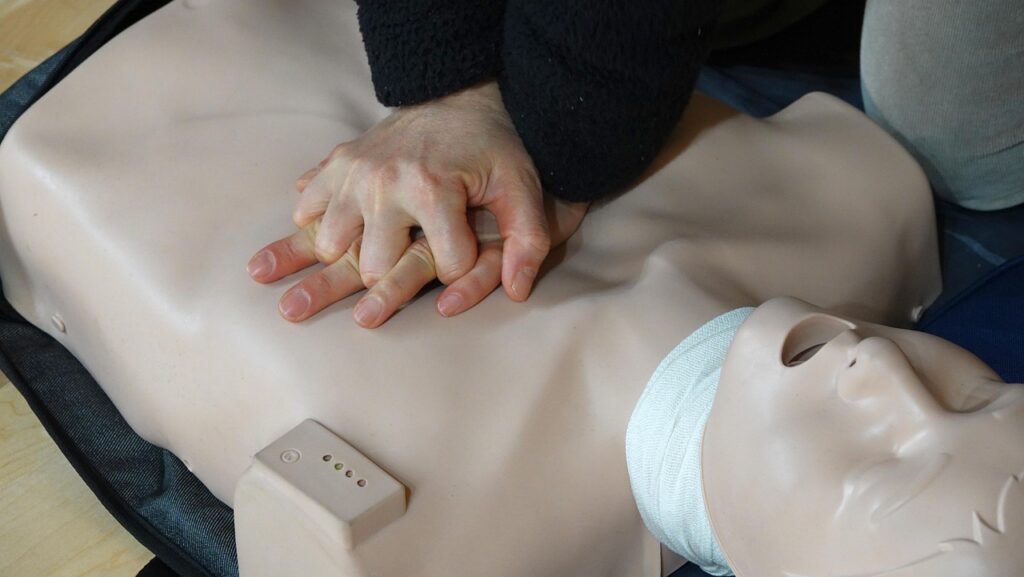
Watching a screen cannot replace feeling real resistance from a manikin or getting feedback on hand placement. Without that, people might:
- Push too lightly or too slowly.
- Put their hands in the wrong place on the chest.
- Miss full chest recoil, which lowers the quality of compressions.
There is also no trained instructor to say, “Move your shoulders over your hands,” or “Push deeper.” And when training is just a video, many workers zone out or multitask, which hurts retention and confidence.
The AHA recommends hands-on practice with an instructor for quality CPR skills, especially for healthcare professionals and designated workplace responders. A blended model can work well, where part of the course is online, but only if there is an in-person skills check with a certified instructor and practice using AED trainers.
We see this blended approach used successfully at our other locations, like AHA skills sessions in Santa Barbara, where staff come in specifically to practice and be checked off on real equipment.
Ignoring AED Use and Workplace-Specific Scenarios
Many trainings spend most of the time on compressions and only a few rushed minutes on AED use. That is a problem, especially if your workplace has an AED on site.
Common mistakes we see include:
- Staff do not know the exact AED location in their own building.
- No one has ever practiced turning the AED on and following the prompts.
- There is no plan for special situations like wet floors or implanted devices.
CPR training should match your actual workplace. That means talking about your office layout, common gathering areas, and where people are likely to collapse. It can also mean planning for shift coverage, security checkpoints, or locked areas that could slow AED access.
A simple but powerful upgrade is to run walk-through drills from “collapse” to “AED on the chest.” Time how long it takes someone to:
- Recognize the emergency.
- Call for help and direct someone to get the AED.
- Bring the AED back, open it, and attach pads to a manikin.
These drills show you if your AED location, staffing, or internal communication needs to change to support fast action.
Failing to Train the Right People at the Right Times
Some employers train only managers or one small safety team and assume those people will always be close by. Real emergencies do not work that neatly.
Cardiac arrest can happen:
- In a quiet conference room with only one other coworker present.
- In a parking lot or loading dock, away from supervisors.
- On a night shift where the “trained person” has left the company.
A better plan is to map out your building and shifts, then look at who is there at different times. AHA-aligned workplace strategies focus on coverage, not titles. That might mean training:
- Staff on every floor and in every major department.
- Front-desk and security staff, who often see people first.
- Fitness center or warehouse employees, where physical stress is higher.
Keep an updated list of certified staff and their expiration dates. Review it during HR or safety meetings so you are not surprised by turnover or gaps in coverage. You can build a similar coverage mindset across locations, such as modeling what works well in places like our AHA courses in Uniondale.
Turning Training Day Into a Passive Lecture
Even when employers schedule in-person CPR training in Cincinnati, the style of the class matters a lot. If the session turns into a long, passive lecture, people get bored, stiff, and quiet. That is the opposite of what you want during an emergency.
When training is mostly talking and slides:
- Staff remember terms, but not how to move their hands or body.
- Anxiety stays high, because they have never practiced under any pressure.
- People leave with a card but still fear “doing it wrong.”
AHA-style best practices look very different. High-quality classes focus on:
- Short, clear explanations followed by immediate practice on manikins.
- Realistic scenarios that match your setting, from healthcare floors to office lobbies.
- Open questions, myth-busting about liability or “breaking ribs,” and calm coaching.
The goal is performance, not perfect test scores. We want employees to be able to step forward, start compressions, work the AED, and support each other as a team.
When Cincinnati employers avoid these common mistakes and focus on hands-on, ongoing, workplace-aware training, CPR stops being a box to check and becomes a real plan for saving lives.
Protect Lives With Proven CPR Skills Today
If you are ready to gain the skills and confidence to act in an emergency, we make it easy to find the right class for you. Explore our CPR training in Cincinnati options to choose the date, time, and location that fit your schedule. At CPR, AED, and First Aid Certifications, we provide hands-on, guideline-based instruction for individuals, workplaces, and community groups. If you have questions about group trainings or specific certification needs, please contact us so we can help you get started.