Common First Aid, CPR, and AED Course Myths for Teachers in Baltimore
Why Baltimore Teachers Need Clear CPR Guidance
Clear, accurate CPR and first aid information can change how a school day ends. When a student suddenly struggles to breathe or passes out in class, teachers in Baltimore cannot pause and search for answers. They need skills they already know how to use, and they need to feel steady and ready to act.
Hands-on first aid training for teachers in Baltimore helps turn panic into a plan. When staff members practice real skills with an instructor, they learn what to do first, who to call, and how to work together. Yet many teachers put off CPR, AED, and first aid training because they hear myths about how hard it is, how long it takes, or what might happen if they try to help.
Those myths are exactly what we want to clear up. We provide instructor-led American Heart Association (AHA) courses designed for real people in real workplaces, including schools. Our classes focus on practical skills, same-day certification cards, and confidence that carries into every classroom, hallway, and field.
Myth 1: Online Videos Are Enough for School Emergencies
A quick online video feels helpful, but it is not the same as a full, instructor-led AHA course. Watching CPR on a screen is passive. In a true emergency, your body needs to remember the motion, not just the picture.
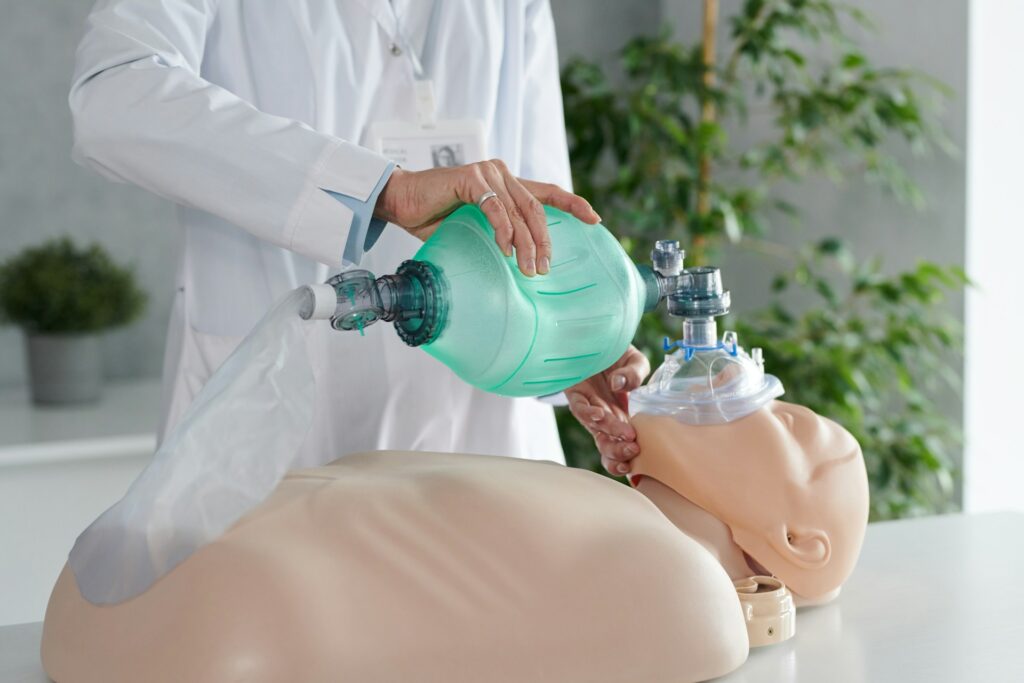
In a classroom course, you actually practice:
- Chest compressions on manikins
- Rescue breaths, when they are part of the response plan
- Turning on and using a training AED
- Simple first aid steps for common injuries
That hands-on practice builds muscle memory. An instructor can see if your compressions are deep enough, if your hand position is correct, and if you are pausing too long. No video can correct your technique in real time.
Instructor-led courses also include school-based scenarios, such as a student choking during lunch, a head injury during recess, or a collapse during sports. In our AHA classes, like the ones we offer in other cities such as Santa Barbara and Troy, we work through these types of situations. That kind of practice helps teachers in Baltimore move faster and with more confidence when every second counts.
Myth 2: Only School Nurses Need CPR and AED Skills
Many teachers think, “The nurse will handle it.” But in a busy Baltimore school, the nurse cannot be everywhere at once. Often, the first adult with a student in trouble is a teacher, coach, bus driver, or office staff member.
When more staff are trained, a school has layers of protection in places like:
- Classrooms and hallways
- Playgrounds and gymnasiums
- Cafeterias and auditoriums
- Buses and after-school programs
AHA guidance stresses how powerful early CPR and quick AED use can be. The sooner compressions begin, the better the chance of helping. Waiting for someone else to arrive can mean a delay that no student can afford.
First aid training for teachers in Baltimore helps shorten the time between collapse and first action. A trained teacher can start compressions, send someone for the AED, and guide others until the nurse or EMS arrives. In a building where most adults are trained, students and staff are surrounded by people who know what to do, not just who to call.
Myth 3: CPR and First Aid Courses Take Too Much Time
Another common worry is time. Teachers already juggle grading, planning, and meetings. It can feel like there is no room for a long class. The good news is that modern instructor-led formats are designed to respect busy schedules while still meeting AHA standards.
Many schools choose options like:
- Group classes during staff development days
- Onsite training at the school to cut travel time
- Scheduled sessions that work around school hours
We focus on practical skills and clear steps, without dragging out the day. Same-day certification cards mean teachers receive proof of training right away, which helps with school and district requirements. Our experience in different locations, such as Uniondale, shows that well-planned courses fit smoothly into school schedules when they are built with educators in mind.
Myth 4: AEDs Are Complicated and Dangerous to Use
AEDs can look intimidating at first glance, with wires, pads, and buttons. Many teachers worry they might press the wrong thing or hurt someone. In reality, AEDs are made for non-medical people to use in high-stress moments.
Modern AEDs:
- Give step-by-step voice prompts
- Instruct you exactly where to place the pads
- Analyze the heart rhythm automatically
- Advise a shock only if it is needed
In an AHA-based CPR AED class, you practice using training devices that act like real AEDs. You learn how to open the case, turn it on, follow the prompts, and make space around the person when the device is checking the heart rhythm. This practice strips away the fear and mystery.
One key point many teachers find reassuring is that an AED will not give a shock if it is not appropriate. The device checks the heart rhythm and only advises a shock when it detects a certain kind of emergency rhythm. That built-in safety makes AEDs far safer than most people expect.
Myth 5: Liability and Myths About Getting Sued
Fear of legal trouble keeps some teachers from acting, even when they want to help. They worry that if something goes wrong, they could be blamed for trying. This fear can be strong enough to make someone freeze.
While we do not give legal advice, Good Samaritan-style ideas are often meant to support people who offer reasonable, good-faith aid in emergencies. Schools and districts can share details about their own policies and local laws, and teachers should always follow that guidance.
Training that aligns with AHA steps gives staff a clear, widely recognized structure to follow. In class, we go over organized response actions such as:
- Checking for safety
- Calling for help and activating school protocols
- Starting CPR when needed
- Using an AED as soon as it is available
When teachers know these steps and have practiced them, they feel more confident doing what they have been taught, instead of guessing. That confidence can lead to calmer, more organized responses, which helps both the person in crisis and the team working around them.
How Quality Training Builds a Safer Baltimore Classroom
Debunking these myths is not just about clearing up rumors. It is about giving teachers in Baltimore real tools for real emergencies. When staff receive strong first aid training, responses become quicker and more calm, and teamwork becomes smoother.
AHA CPR, AED, and first aid certification supports school safety plans and workplace rules that call for trained responders on site. When more adults in the building share the same skills and speak the same emergency language, students and staff are surrounded by a stronger safety net. Each trained teacher, coach, and staff member adds another layer of readiness, so that when something serious happens, the school is not relying on one person. Instead, it has a whole team ready to act when seconds truly matter.
Equip Your School With Lifesaving Skills Today
Give your staff the confidence to respond calmly and effectively when it matters most with our tailored first aid training for teachers in Baltimore. At CPR, AED, and First Aid Certifications, we focus on practical, classroom-focused scenarios so your team knows exactly what to do in an emergency. If you are ready to schedule a course or have questions about group options, please contact us so we can help you build a safer school community.