Recognizing High-Quality First Aid Classes for Baltimore Workplaces
Protect Your Baltimore Team with Proven CPR and First Aid Skills
When a medical emergency happens at work, your team does not have time to guess what to do. A coworker might collapse from sudden cardiac arrest, choke during a quick lunch, or suffer a deep cut on a job site. In those first few minutes, trained CPR and first aid skills can keep a bad situation from getting much worse.
That is why strong CPR and first aid classes matter for Baltimore workplaces of every type. Employees need simple, clear steps they can trust, based on current science from organizations like the American Heart Association (AHA). Not every course offers the same quality, so it helps to know what to look for before you sign your team up.
In this article, we will walk through how to recognize high-quality CPR and first aid training, which features support real emergencies, and how same-day certification can help with workplace safety and compliance.
Why CPR and First Aid Training Matter for Baltimore Workplaces
When someone gets hurt or sick at work, EMS is not always right around the corner. Trained coworkers can start CPR, use an AED, and provide first aid to keep the person stable until professional help arrives. Good CPR and first aid skills help team members:
- Start high-quality chest compressions and use an AED when someone is in cardiac arrest
- Control serious bleeding until EMS takes over
- Support someone who is choking or unable to breathe well
- Respond to sudden problems like chest pain or signs of stroke
- Stay calm while another person calls 911 and guides help in
In offices, warehouses, construction sites, schools, and healthcare settings, fast action often means fewer long-term problems. CPR and first aid classes give employees a shared plan so they are not arguing or freezing in the moment.
Many Baltimore employers also connect CPR and first aid training with their safety programs. AHA-based courses line up well with common workplace safety goals, including:
- Meeting internal HR and risk management expectations
- Supporting OSHA-related training requirements and audits
- Backing up written emergency response plans with real skills
When your team knows what to do and has practiced the steps, you build a safety culture that goes beyond posters and policy binders.
Core Features of High-Quality CPR and First Aid Classes
Strong CPR and first aid classes cover more than a quick slideshow and a few bandages. For workplace readiness, a solid course should include:
- Scene safety and assessing what is happening
- When and how to call 911 or activate your company’s emergency plan
- Adult CPR, including high-quality chest compressions and rescue breaths (as appropriate)
- AED use, including turning the device on, following prompts, and ensuring safety during shocks
- Bleeding control, including direct pressure and basic dressings
- Help for burns, sprains, strains, and suspected fractures
- Choking response for adults, and often children and infants
- Basics of common medical emergencies, like allergic reactions and low blood sugar
Teaching CPR, AED, and first aid together helps employees see the full chain of response, from spotting trouble to using an AED on a person in cardiac arrest and then providing follow-up care until EMS arrives. This integrated approach helps them feel more confident in real cardiac events.
AHA-aligned courses are built around current science and simple, clear steps. The guidelines are updated on a regular schedule so lay rescuers and healthcare professionals are trained with methods that reflect current research, not outdated habits. Many employers in different cities trust AHA-based programs, whether they train in Baltimore or at locations such as Uniondale or Troy.
Evaluating CPR and First Aid Training Providers in Baltimore
Not all training providers offer the same quality or depth. When you are choosing workplace CPR and first aid classes, it helps to ask direct questions:
- Is the course based on AHA guidelines for first aid, CPR, AED, and BLS?
- What qualifications and background do the instructors have?
- How many students are allowed per class and per instructor?
- How much time is spent on hands-on practice with manikins, AED trainers, and other training devices?
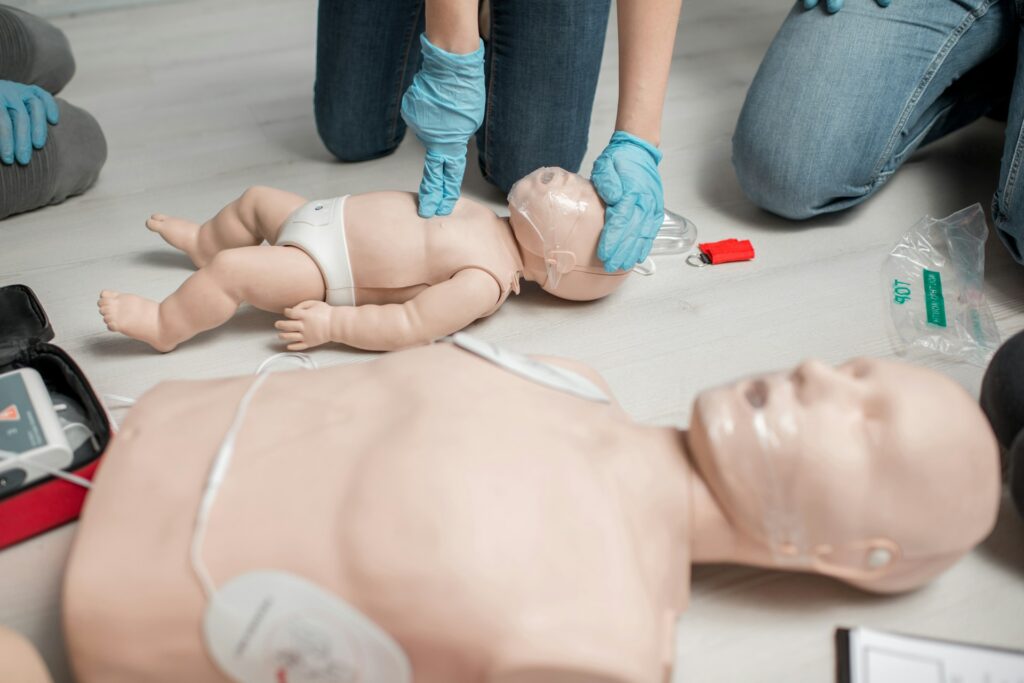
Hands-on practice is especially important. Employees need to try skills like chest compressions, using an AED trainer, or applying a bandage while an instructor gives feedback. Sitting and listening is not enough to build real confidence.
Same-day proof of completion or certification cards for CPR and first aid are also very helpful for HR and compliance tracking. When staff finish the class, you want quick and clear records to show they met your training requirements.
You can also review:
- Online ratings and written feedback from other organizations
- Whether the provider has repeat clients in similar industries
- If they offer both community-level CPR and first aid and BLS options for clinical staff
Providers that serve workplaces across different regions, such as those who also run classes in Santa Barbara, often have experience adapting courses to many job roles.
Matching CPR and First Aid Courses to Job Roles and Risks
A one-size-fits-all approach does not always meet every team’s needs. When you choose CPR and first aid classes, it helps to think about the actual work your people do.
For example:
- Office settings may focus on medical emergencies, basic first aid, CPR, and AED use.
- Industrial or warehouse sites might need extra attention on bleeding, crush injuries, and quick CPR and AED response when coworkers are spread out over a large area.
- Hospitality venues have constant public contact, so choking and cardiac emergencies may be higher priorities, making CPR and AED training essential.
- Schools and childcare settings often need coverage for children as well as adults, including pediatric CPR and choking relief.
- Healthcare environments usually require BLS for licensed staff, with community-level CPR, AED, and first aid courses for non-clinical employees.
Basic CPR and first aid courses are usually designed for lay rescuers. They cover everyday emergencies and pair CPR and AED skills with first aid for injuries and sudden illness. BLS, on the other hand, is built for healthcare providers and certain public safety roles. It includes more detailed CPR for different age groups and team-based response skills.
Employers can map course content to:
- Their written emergency plans and evacuation routes
- Where AEDs and first aid kits are located
- Common hazards in each department or job role
This way, the class supports what staff are most likely to face on the job.
Practical Tips, Compliance, and CPR/First Aid FAQs
Once you know what type of CPR and first aid class you want, the next step is planning. For Baltimore workplaces with different shifts and busy schedules, you might:
- Arrange on-site classes so staff train without long travel times
- Use a blended format when available, with online CPR and first aid learning plus in-person skills practice
- Stagger sessions so every department can keep operations running
Refresher training is also important. Skills like CPR compressions, choking relief, AED use, or EpiPen support can fade over time. AHA-based certifications typically last a set period, so many employers schedule refreshers before cards expire to help staff stay current with guideline changes and keep their skills sharp.
It also helps to:
- Run simple drills where staff practice their roles in a mock cardiac arrest or injury scenario
- Assign people to check AEDs and first aid kits on a regular schedule
- Keep emergency numbers and CPR/AED procedures posted where everyone can see them
Here are some common questions we hear about workplace CPR and first aid classes in Baltimore:
How long does a typical workplace CPR and first aid class take, and can it be done in one session?
Most standard CPR, AED, and first aid courses are designed to fit into a single workday or split into shorter blocks. Many employers choose one-session formats so teams can finish together.
Do employers need both CPR and first aid training, or is first aid alone enough?
First aid alone may not cover cardiac arrest or serious breathing emergencies. Many workplaces choose combined CPR, AED, and first aid courses so staff are ready for a wider range of events, including life-threatening cardiac emergencies.
How often should employees renew their CPR and first aid certification, and what happens if a card expires?
Renewal periods are set by the course guidelines. If a CPR or first aid card expires, employees usually need a full class or renewal course so they meet employer and professional requirements again.
Can CPR and first aid classes be customized for specific industries like construction, healthcare, or childcare?
Yes, many providers adjust scenarios and examples to fit the risks and policies of different workplaces while still following AHA-based CPR, AED, and first aid content.
Are AHA-based CPR, first aid, and BLS certifications widely accepted by employers and licensing boards?
AHA-aligned certifications are commonly requested by employers, schools, and various boards because they follow recognized guidelines for emergency care training, including CPR, AED use, and first aid.
Build Confidence With Practical First Aid Skills Today
Take the next step toward being ready to help in an emergency with our comprehensive first aid classes. At CPR, AED, and First Aid Certifications, we focus on real-world practice so you feel prepared, not just informed. Whether you are training for work, school, or personal peace of mind, we have flexible options to fit your schedule. If you have questions about choosing the right course, please contact us.